
I wake up early, even before the alarm goes off. The night was quiet, despite the snoring in the room. There were only three of us, but the Korean guy across from me snored for two.
I greet Gary and mention I had a few nightmares. With a smile, he replies:
—I’m a shouter too!
I look at him, puzzled, and then he tells me that last night, at the height of the Korean’s snoring symphony, I suddenly sat up in bed and yelled:
—What the fuck?!
The Korean immediately stopped snoring.
Considering my history of sleepwalking, I’m not surprised. However, I feel like I owe an apology to the Korean guy, who has already left, so it will have to be at another time.
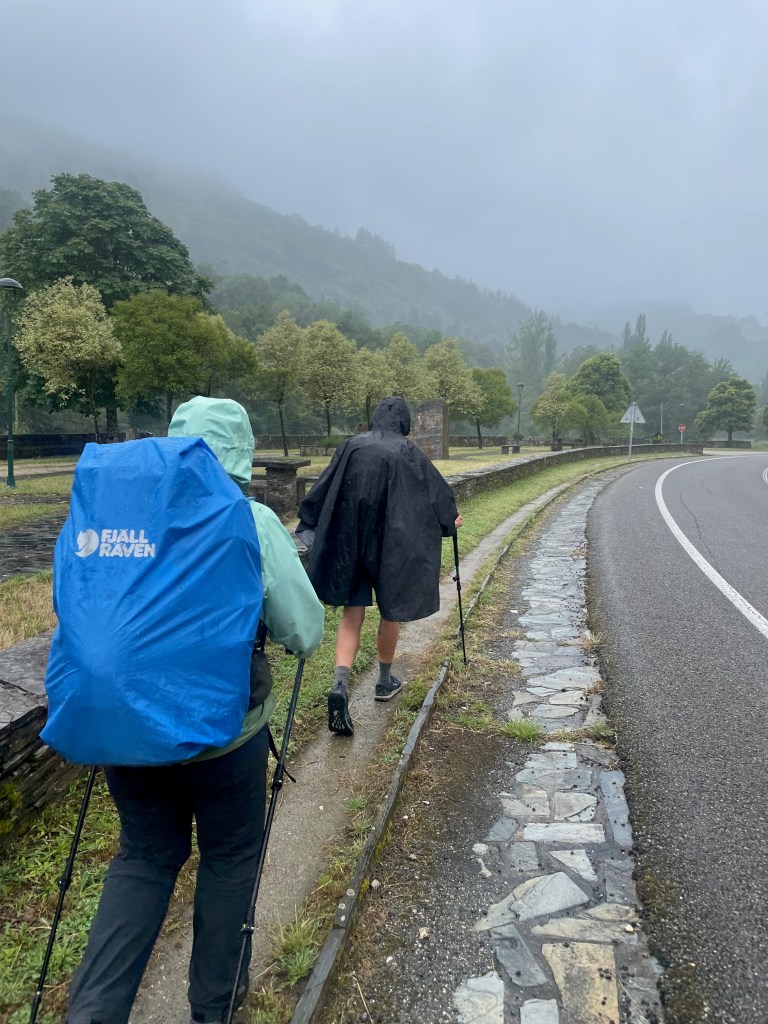
Today we agreed to do the stage together, so we pack our things and head to a café for breakfast. A light but persistent drizzle falls, with no sign of stopping anytime soon. We put on our rain gear and set off.
Gary tells me that today’s route offers two options: a direct path and another with an 8-kilometer detour through Samos, a village known for its large monastery. Considering the weather—and the fact that I’ve seen enough monasteries lately—we decide to take the direct route. Now we just need to stay alert at the fork to choose the right path.
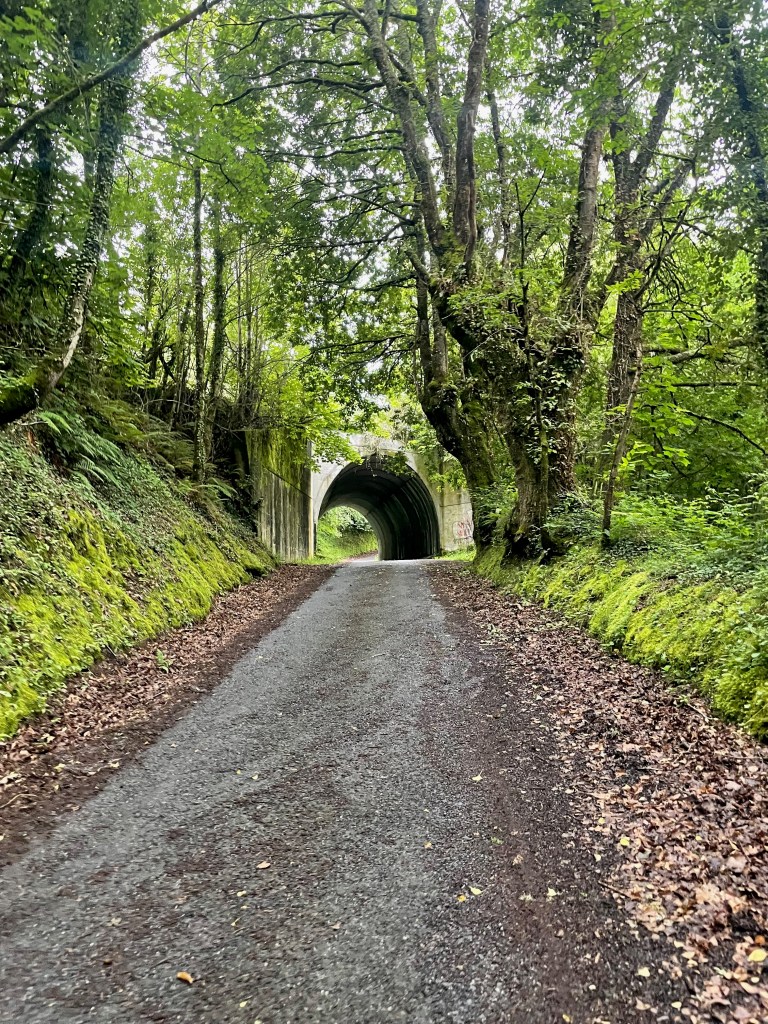
As we leave the village, the trail winds through a dense forest of oaks and chestnuts, their intertwining branches forming a natural roof that filters the sunlight into golden patches on the damp ground. The air smells of wet earth and moss, with a faint hint of wood. The dirt path is soft from the morning drizzle, and here and there, tree roots emerge like veins from the ground, demanding careful steps.
The sounds of the forest are a peaceful symphony: the crunch of leaves underfoot, the whisper of the wind brushing the treetops, and the distant song of a stream running parallel to the trail, hidden behind thick vegetation. Small rays of sunlight manage to pierce through the leaves. Further along, the path narrows, flanked by moss-covered stone walls dripping with moisture.
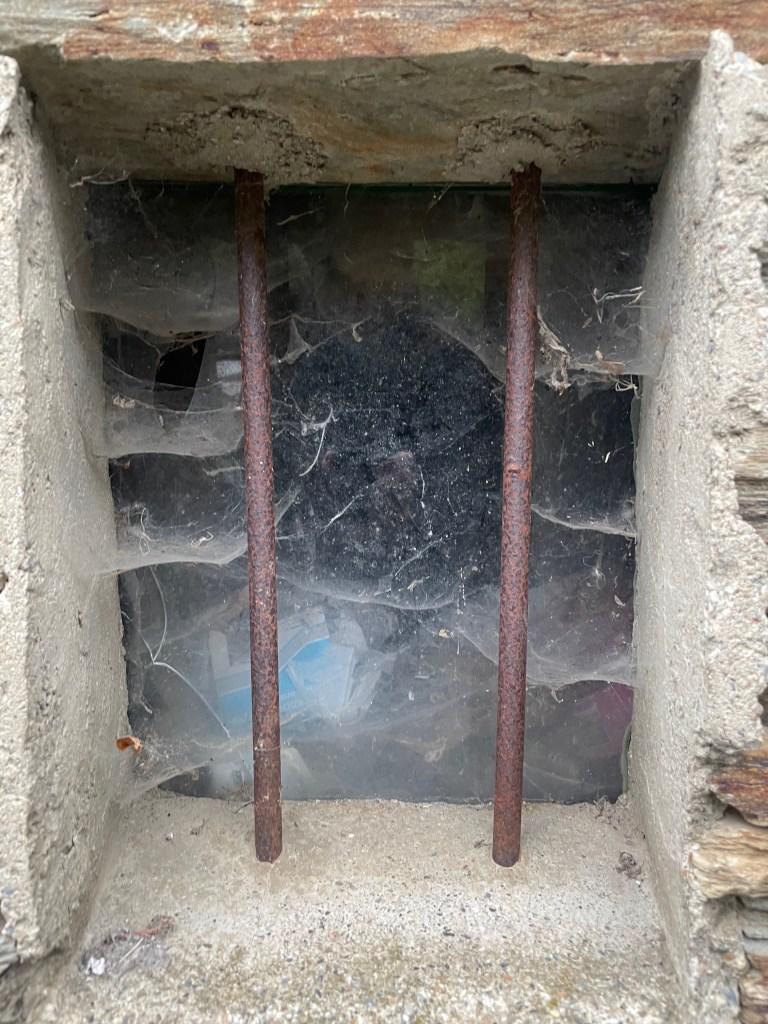
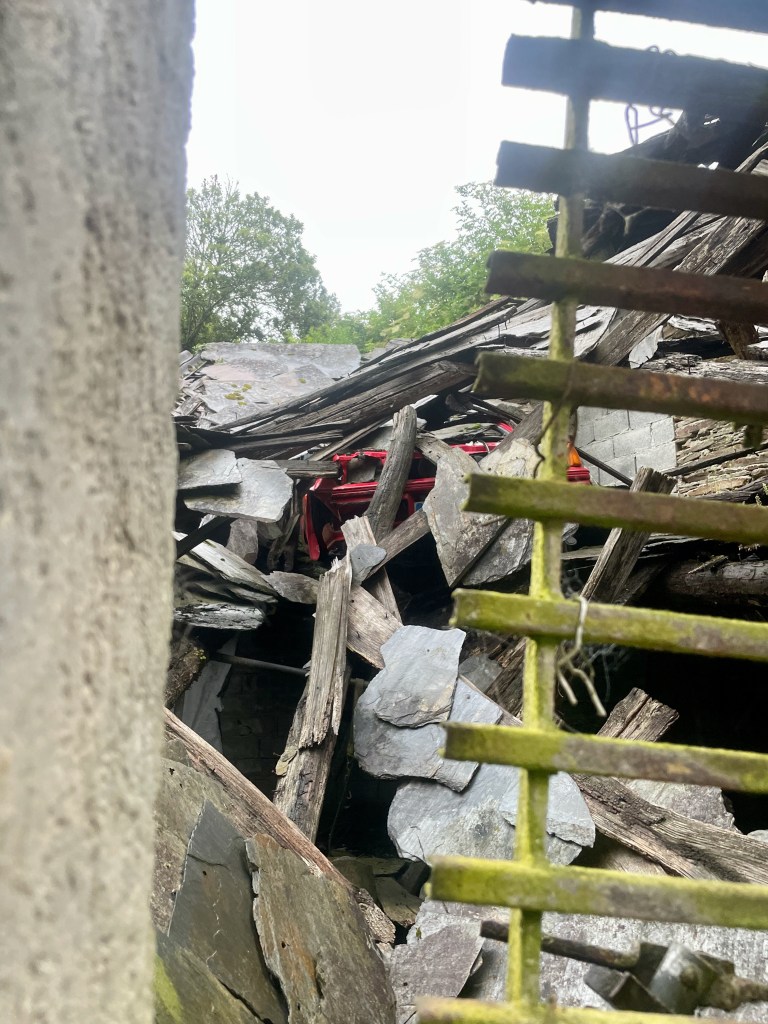
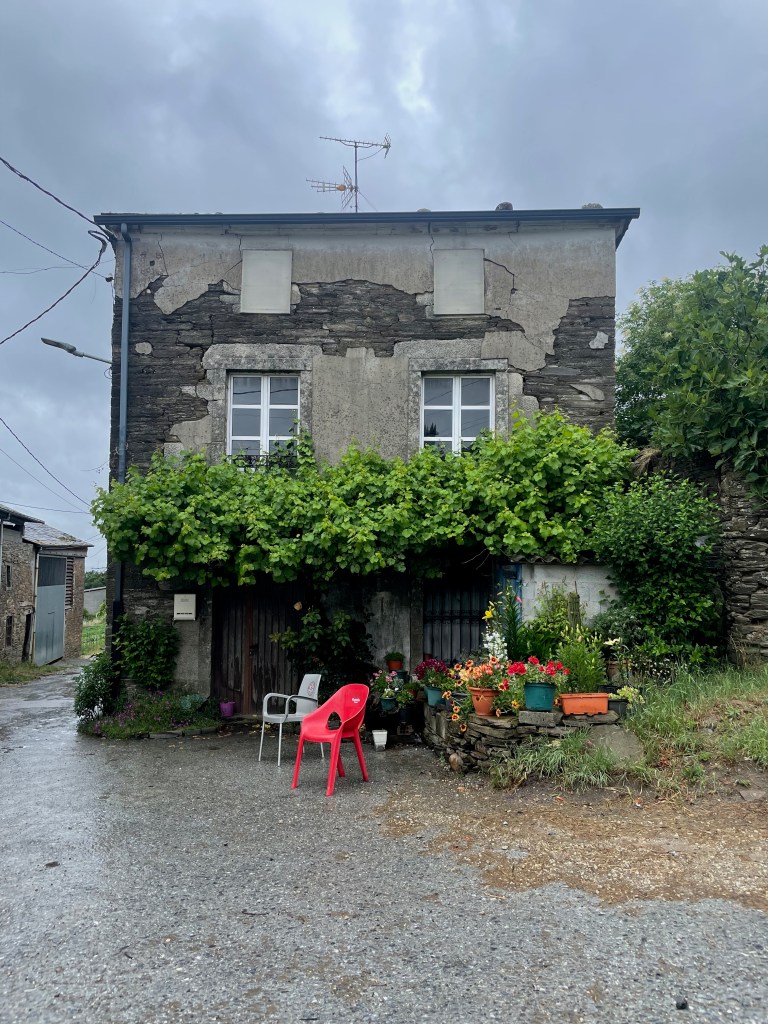
We reach an abandoned village, a place where time seems to have stopped. The houses, wrapped in cobwebs and embraced by vines, show their structures worn down by neglect. In one of them, I stop and peer through a broken window. On the second floor, a red car, completely crushed, rests beneath collapsed beams. It looks as if it fell from the sky, crashing through the roof to become trapped inside the house. The scene feels like something out of a dream.
We keep moving and cross a cemetery that marks the end of the village. The tombstones, weathered and covered in moss, timidly emerge from the undergrowth, as if struggling not to be swallowed by the relentless advance of nature. Afterward, the forest welcomes us again. Its trees close in around us, and the path darkens beneath the thick vegetation.
After a few more kilometers, we arrive at a small village that seems to mark the fork in the road. Just then, a man walks by, and I take the chance to ask if he knows which way the direct route is. He laughs and tells me the direct path was much further back. At this point, there’s no use going back. We’re on the path we had tried so hard to avoid all morning.
We press on for a while longer until we finally reach Samos. From a distance, we spot the famous monastery. It’s quite large, but we decide not to visit it. Instead, we enter a bar to rest. I order a Spanish omelet and a beer. Gary gets a coffee. As we leave, we chat briefly with Judith, a German pilgrim who is also setting out for the day. We walk together for a while.
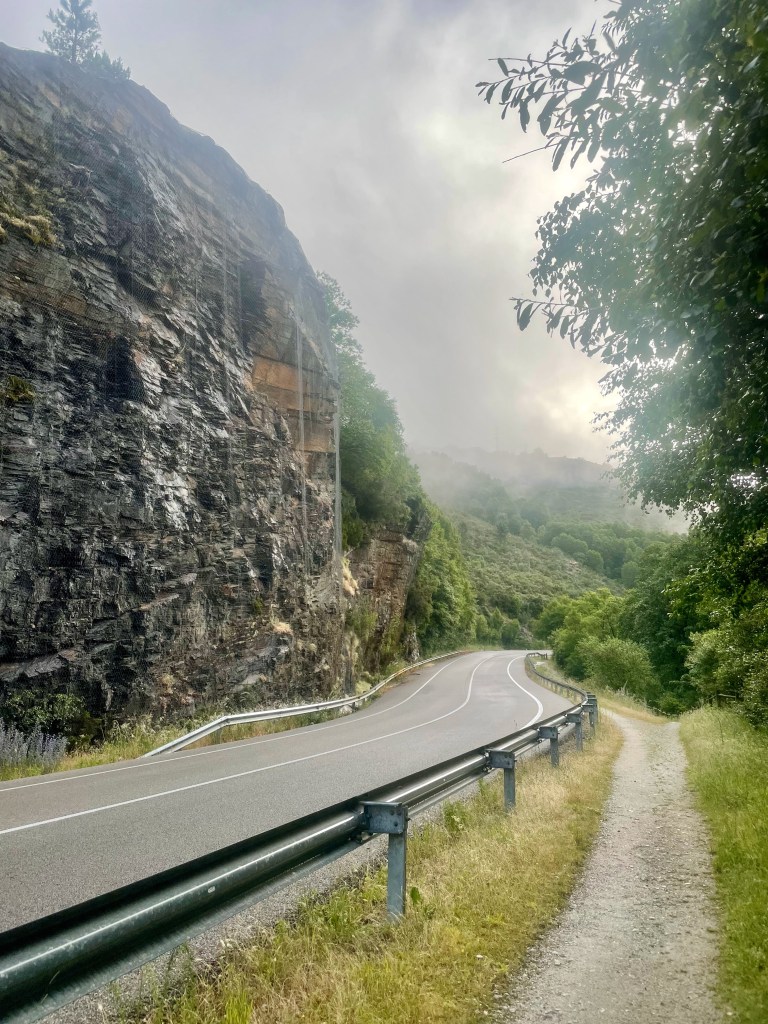
The journey feels easier as we share our Camino stories. We cross a road, then return to the forest path, passing rivers and skirting stone walls. About a kilometer from our destination, Judith says she needs to rest. We stop by a Camino marker and have a small picnic, each contributing what we have. Judith pulls out some fresh fruit, Gary adds chocolate, and I offer nuts.
Just then, the Canadian women we’ve crossed paths with several times appear. Soon after, another group of American women joins, along with one more pilgrim. It’s one of their birthdays, so we improvise a small celebration before continuing the final stretch.
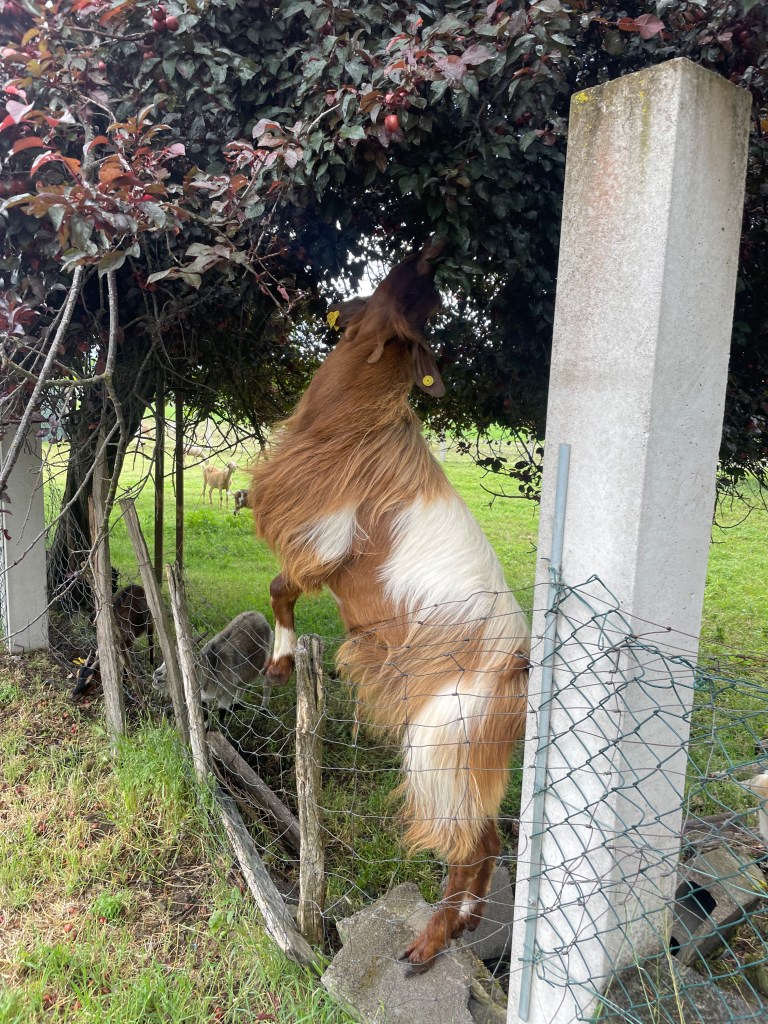
The houses become more frequent, and the surroundings reflect the closeness of a town. We pass a fenced yard with a herd of goats. One stands out, perched on some rocks, eating cherries from a tree.
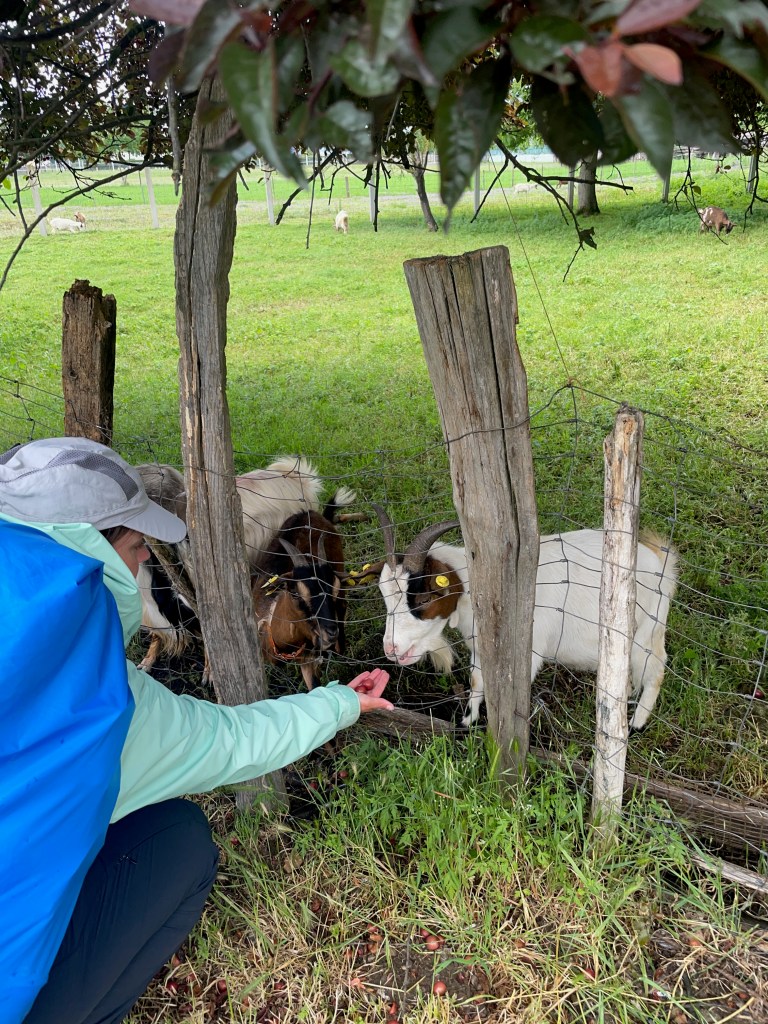
Gary says goodbye and continues on to the next town. Judith and I stay behind to feed the smaller goats that can’t reach the fruit. I pluck a few cherries and offer them to one of the smallest goats. The animal takes the fruit from my hand with surprising gentleness. I watch, enchanted, until suddenly it starts choking. I freeze for a moment, noticing how another goat nearby plucks the cherries with the same delicacy but carefully separates the branches. That’s when it hits me—I probably should have cleaned the fruit before offering it.
The goat keeps choking, and my impulse is to help, but a fence between us prevents me. Though honestly, what could I even do if I reached it? I have no idea how to perform the Heimlich maneuver on a person, let alone a goat.
I stand there feeling helpless and ridiculous, trying to think of a solution while hoping the goat’s resilience gets it through. The three Canadian women arrive just in time to witness the scene, and as the goat recovers, one of them dubs me “Sergio, the Goat Killer.”
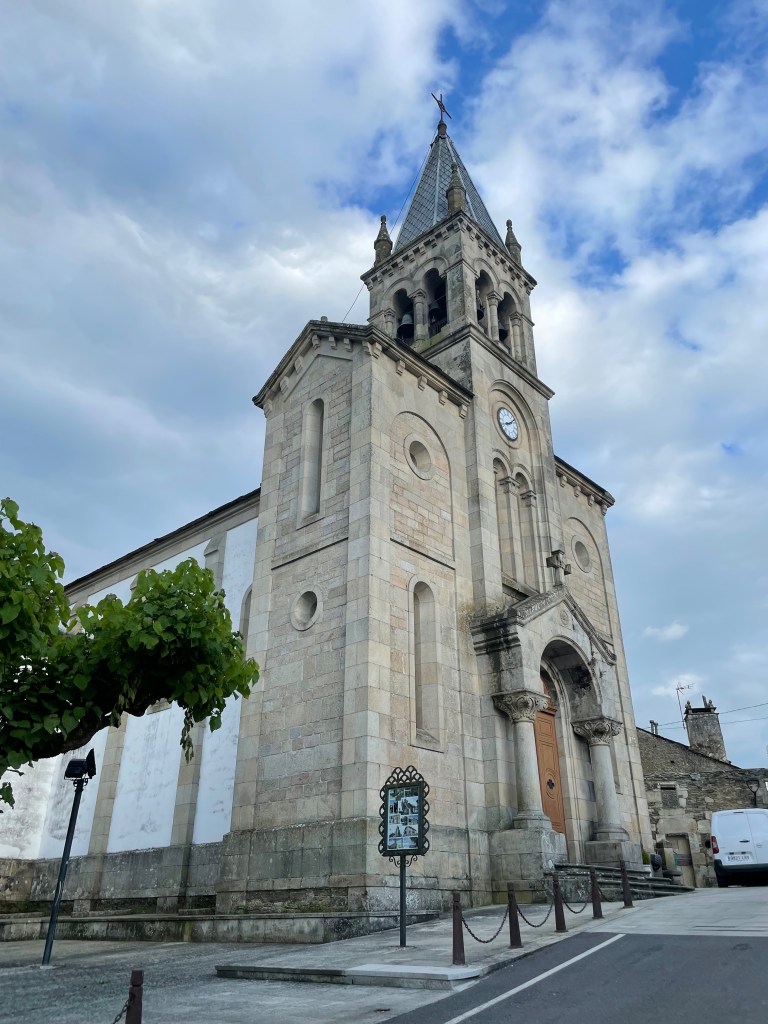
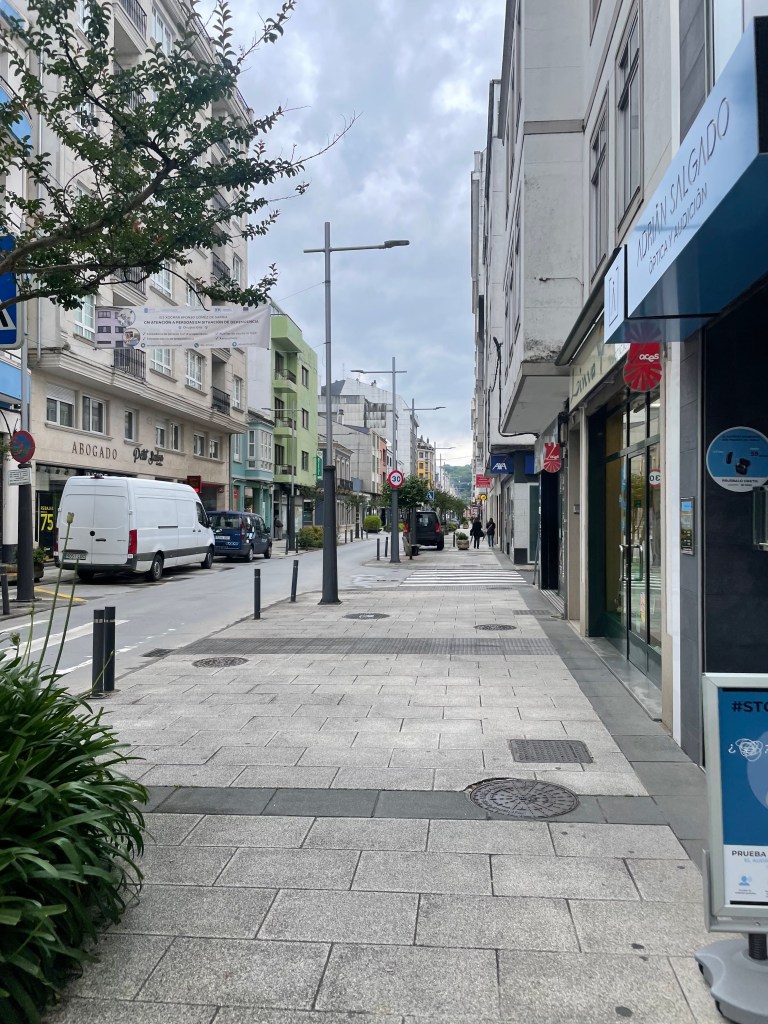
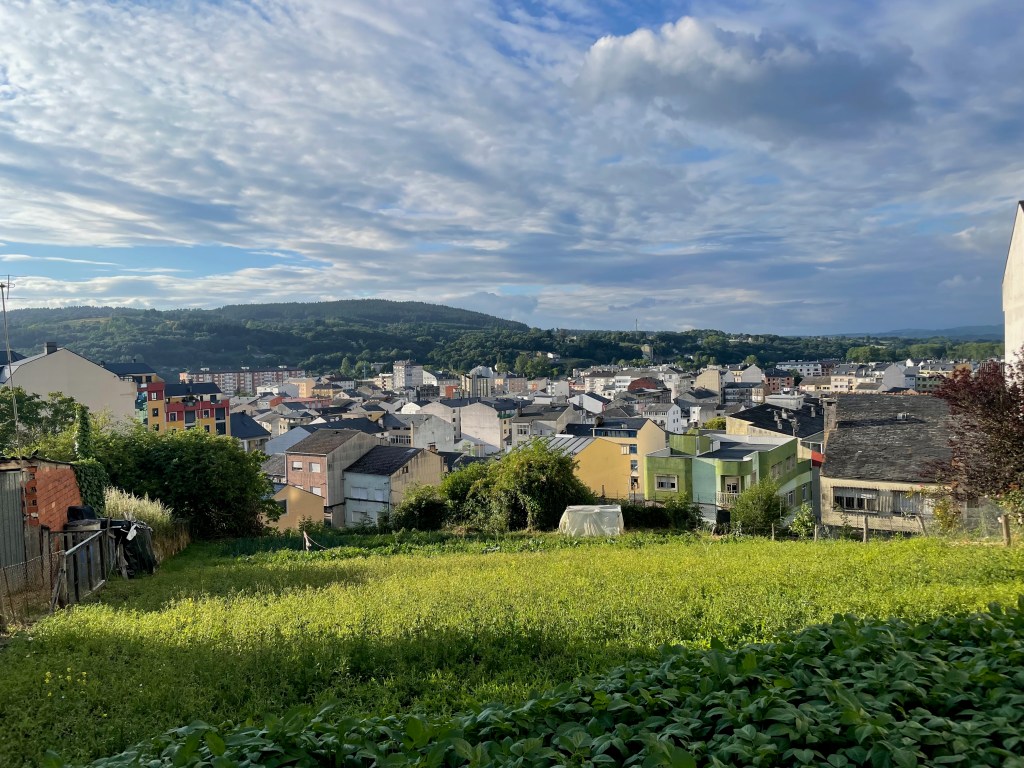
Enough goat drama. It’s time to rest. We exchange numbers and say goodbye. I check into the hostel, shower, and eat at the café across the street. Judith messages me, and we make plans to meet. I join her for dinner at a restaurant, and then we walk around Sarria. We pass by the church, chat for a while, and say our goodbyes.
Tonight, Spain plays Italy, so I head back to the café where I ate earlier to watch the match.

 motionserg