
Today I wake up a little later than usual. My shoes are still wet, despite having stuffed them with newspaper the day before to dry them. I no longer feel muscle pain, but my left knee aches, and now I have a blister on my right foot that’s about to burst. I put on a patch that Gary gave me, hoping it will be enough to keep the blister in check for the day.
I head to a café for breakfast. There aren’t many options, so I order a ham and cheese sandwich to put something in my stomach. Now I’m ready for the Camino. I pull out the walking stick I bought yesterday and decide to hold it with my left hand to ease the pain in my knee, as the blister pain is becoming more bearable.
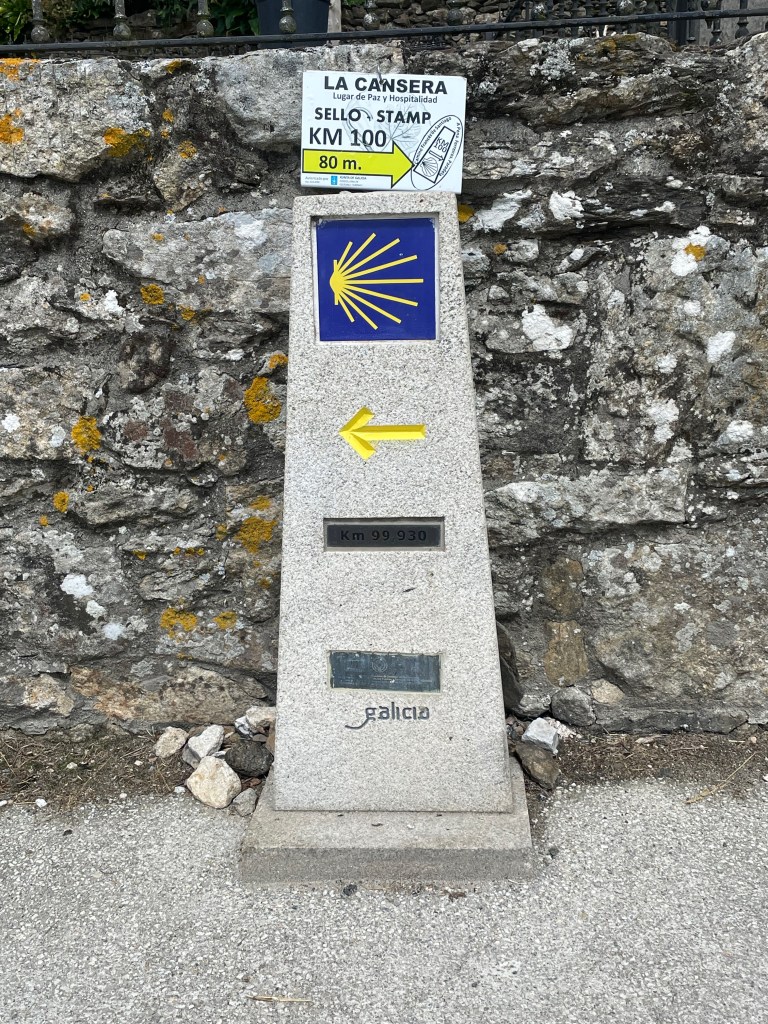
I walk slowly, looking for the yellow arrows that guide the way out of Sarria. I cross a wooden bridge and reach a wooded uphill trail. I start seeing other pilgrims, confirming I’m going the right way. The Camino is more crowded today. This is one of the most iconic stages, especially for those starting their pilgrimage in Sarria, as this is where the final 100 kilometers required to earn the Compostela begin. Despite the pain with every step, I make an extra effort to overtake a few families with children, thinking that afterward, the Camino will be clear.
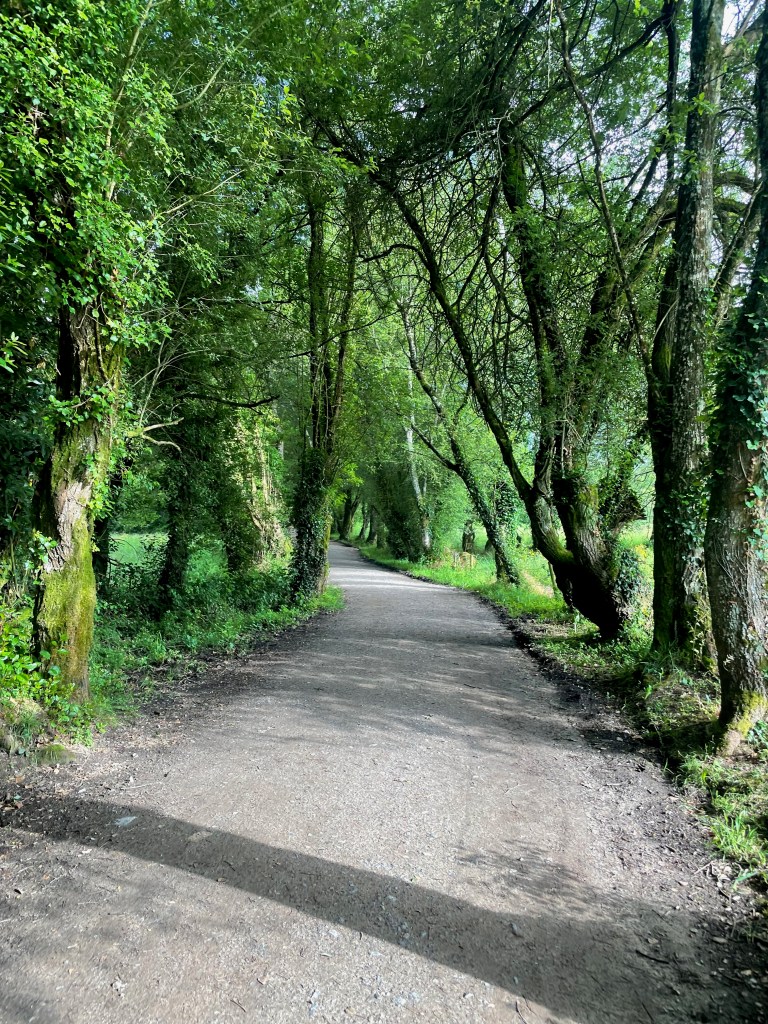
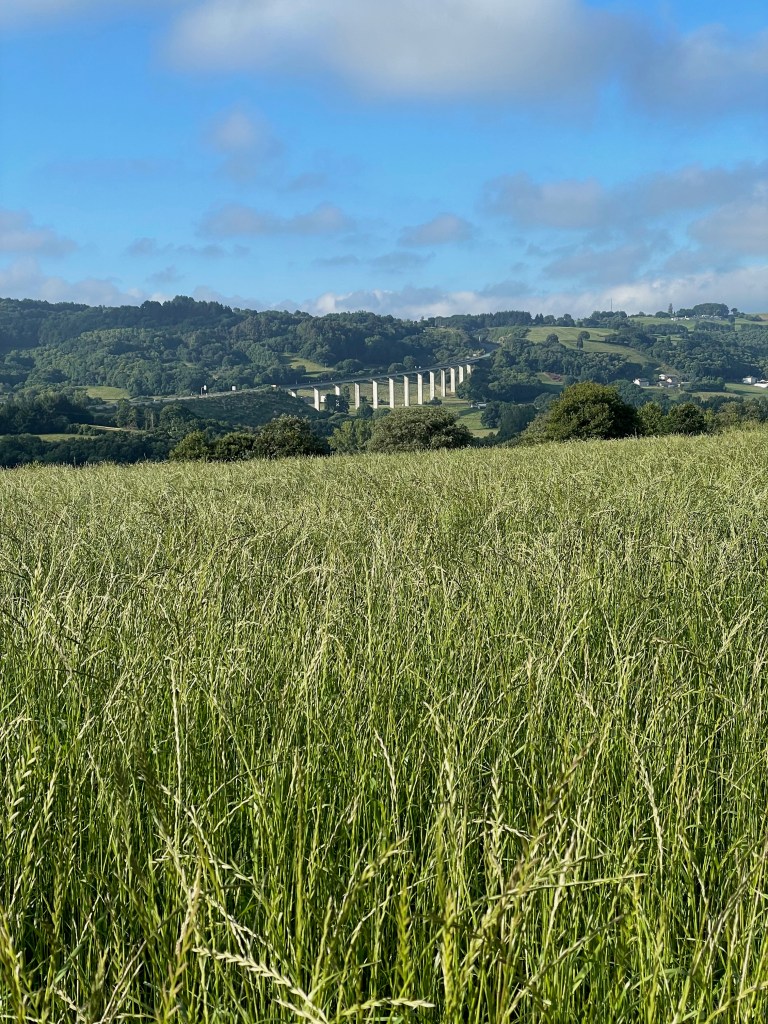
The wooded trail comes to an end, and I stop to put on sunscreen before continuing the next stretch through the Galician meadows. I rest my backpack on a rock, and after applying sunscreen, I find myself face-to-face with the stinging plant I had the displeasure of encountering the day before. I take it as the first stroke of luck for the day, but also as a warning.
I move on a bit more, and around a bend, I come across a group of schoolchildren joining the Camino. Five minutes later, at another curve where two paths converge, a group of people in uniforms with a Camino logo on their shirts appears. The peace is over. I walk between the two groups for quite a while until I finally warm up and push ahead to overtake them. Just as I leave them behind, I spot even more groups of people ahead and realize the path will be crowded today.
The blister is getting worse. I’m about halfway through the day’s walk when I notice my water is running low, and I need to refill it. I arrive at a populated area and find a café, so I decide to stop. As I approach the door, the Danish girl appears, also taking a break. We greet each other and chat while waiting in line. I order a Spanish omelet and sit with her. She tells me she booked a hostel in Portomarín, the next stop, as she thinks it will be hard to find a spot directly there due to the crowds. After a while, we say goodbye and continue.
I start to think maybe I should make a reservation to secure a place for tonight. The internet signal is terrible, so I can’t even open the app to check availability. Oh well. I’ll find something. I resume walking, and the pain in both my knee and foot intensifies. I go slowly, taking advantage of muddy or grassy areas to reduce the impact. It doesn’t help much, but it makes some difference. The uniformed group, the school kids, and everyone else I passed earlier overtakes me.
At some point, a couple I’ve seen before passes by and wishes me a good Camino.
—Buen Camino… again —I reply.
They laugh, remembering our previous encounter. I ask about their tattoos, and when she tells me hers represents an evolutionary tree, the conversation deepens. We start talking about biology, physics, history, and spirituality. The pain fades into the background as we share experiences.
Aurelie and Fred tell me they’re from Canada and are in a polyamorous relationship. She’s a midwife, and he’s a clown who works with terminal patients. She works with life, and he works with death. Fittingly, she’s dressed in white, and he’s in black. They tell me they’re doing the pilgrimage by camping, which is why their backpacks are so heavy.
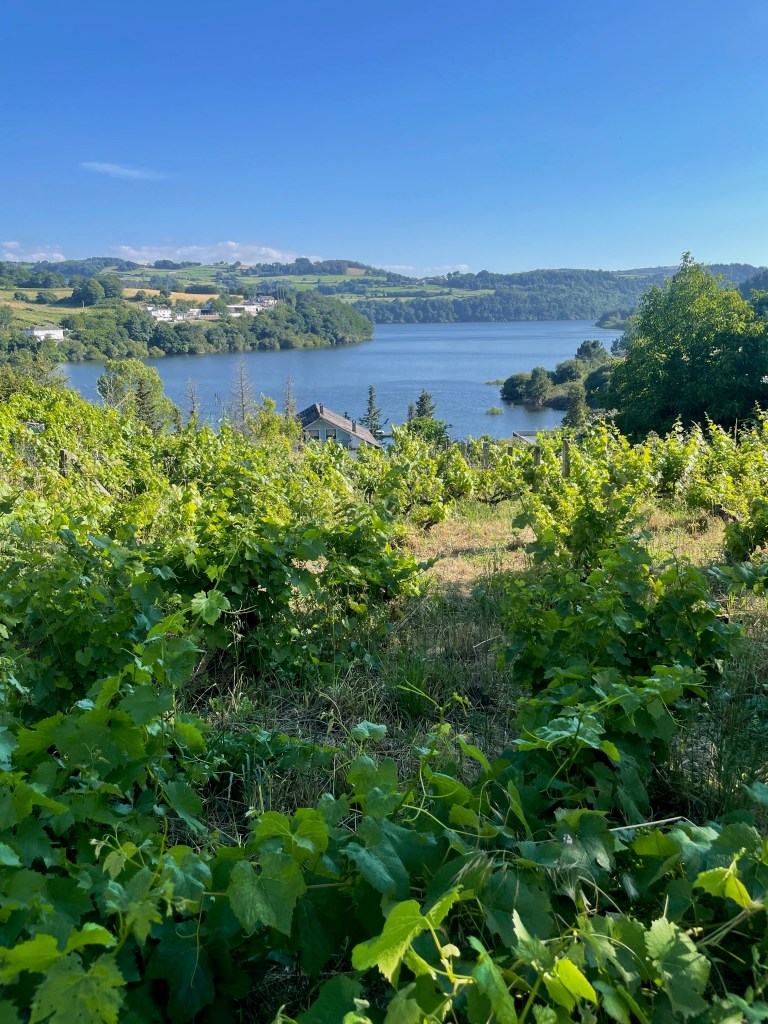
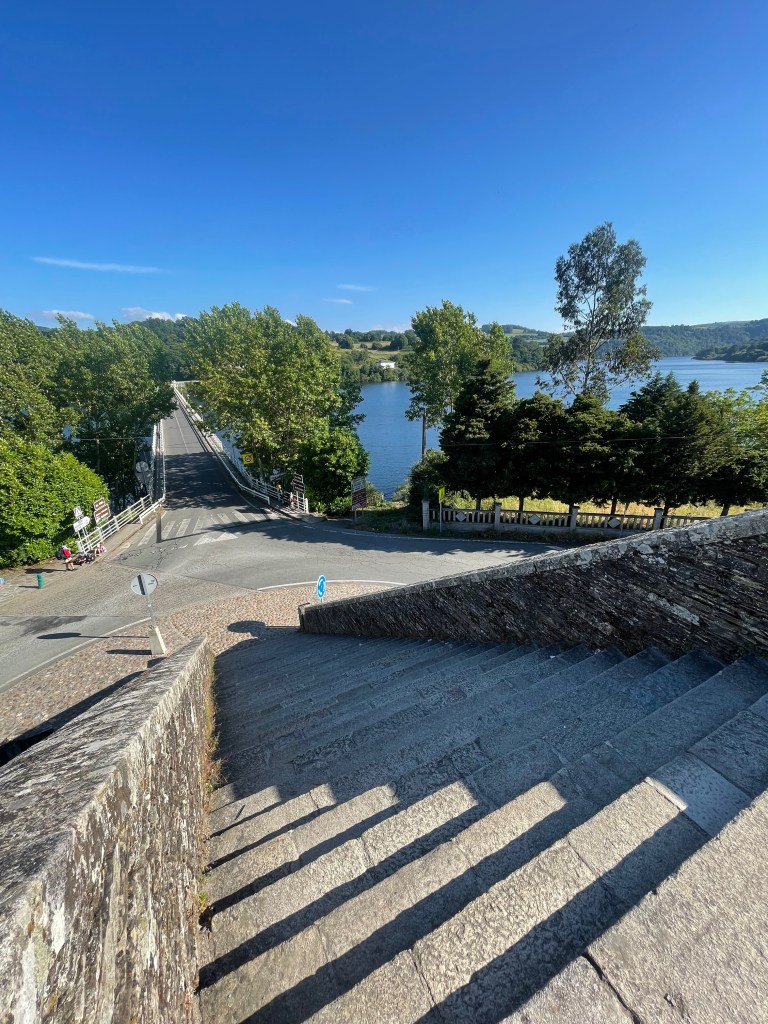
The last few kilometers pass quickly, and before we know it, we’re crossing a bridge over the Miño River. I feel the cool breeze on my face and hear the soft murmur of the water below. The view is breathtaking—the reservoir stretches calmly on both sides, reflecting the sky and the green hills surrounding the valley. In the distance, we spot the silhouette of Portomarín.
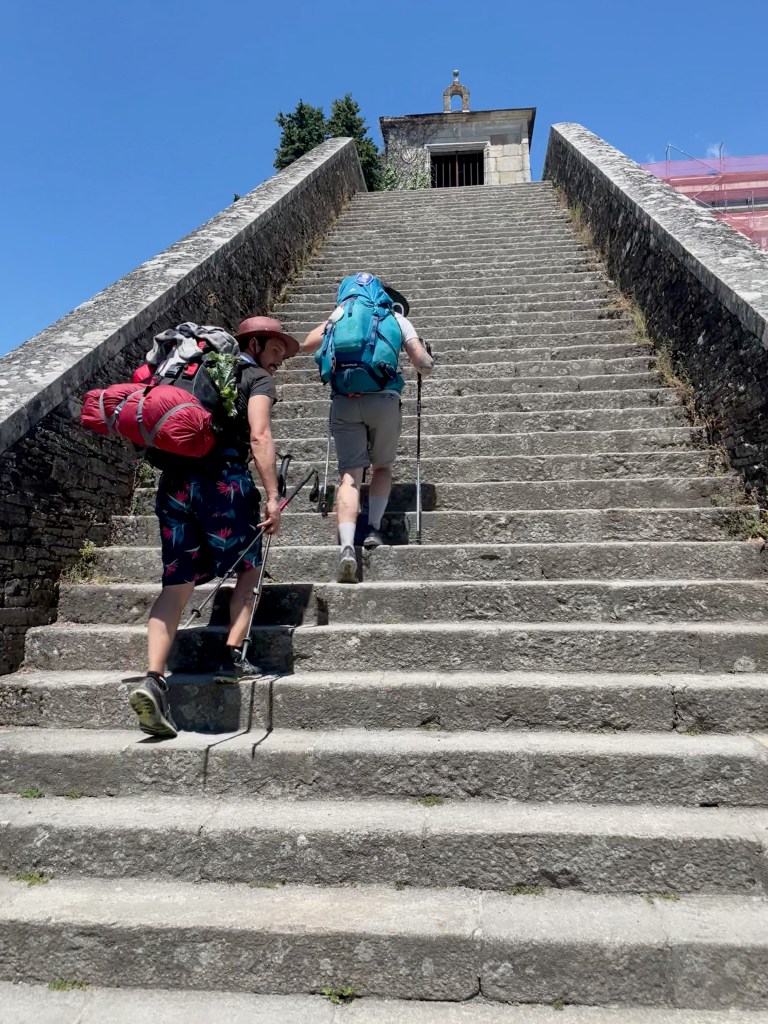
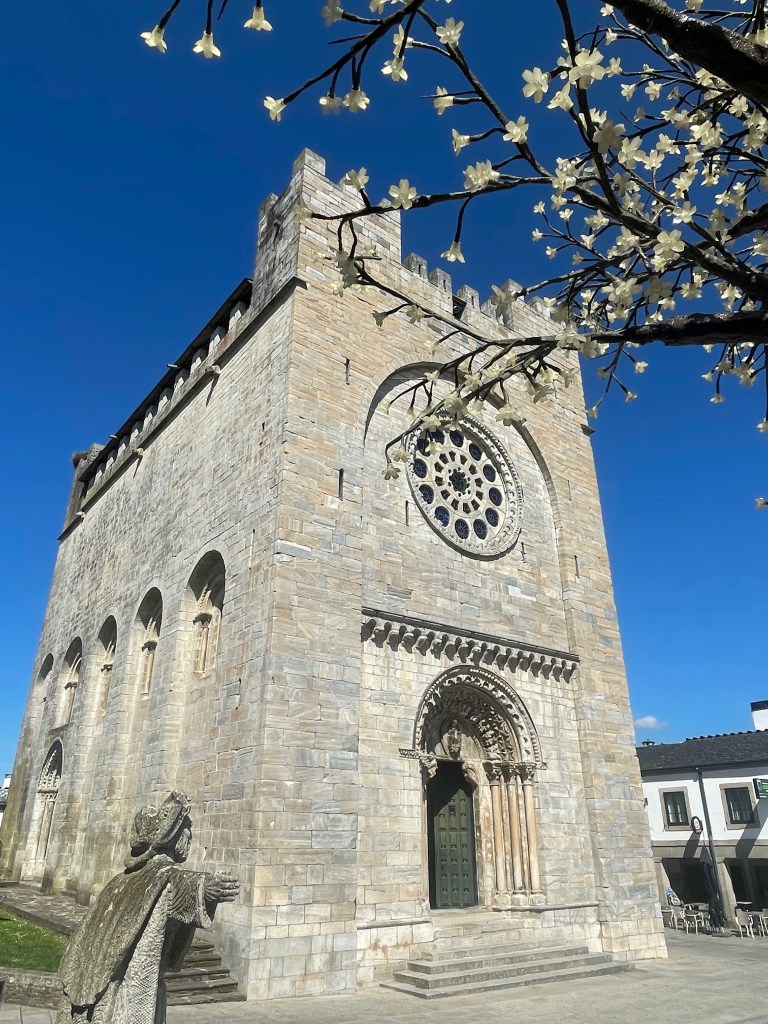
At the end of the bridge, we face an uphill climb. A stone staircase marks the entrance to the town. The ascent is short but steep, and as we climb, the medieval arch atop the stairs welcomes us with its imposing presence. I say goodbye to the couple and cross under the arch to enter the town. I walk through cobbled streets and stone houses. I quickly find a hostel without any trouble, which was my main concern given the crowds that day. I get a bed in a room with two groups of Spanish women, who instantly befriend each other.
The afternoon passes peacefully. I stroll through the town at a slow pace because I’m tired. I stop at a park overlooking the lake for a while, then head to the pharmacy to buy a knee support band. Judith messages me, telling me she’s taken a rest day, so I probably won’t see her again. Later, I meet up with the two Andalusian women I’m sharing the room with, and we go out for something to eat together.
At night, as I get ready for bed, I decide to take off the patch over my blister to let it breathe, ignoring the fact that the patch’s adhesive was designed to last several days and is very stuck. Just as I’m standing on one foot, holding onto the bed with one hand and trying to peel off the patch with the other, one of the older women sees me and hurries to stop me:
—You’re going to make the wound worse —she warns.
I sit on her bed, and she carefully trims the patch’s edges. Then she disinfects the blister with alcohol, while her friend recommends I buy an insole. These 70-year-old women have done the Camino three times and know exactly what they’re talking about.

 motionserg