
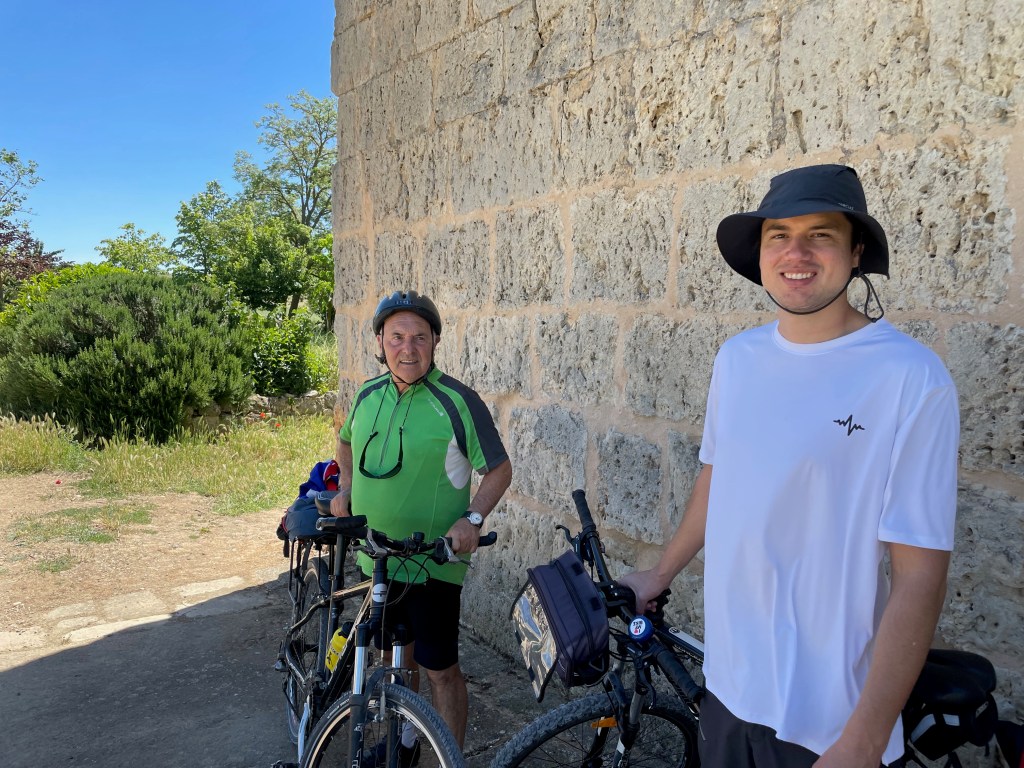
I wake up at 7 a.m. We have breakfast and set off with Argos. Today’s plan is to cycle 45 kilometers to Frómista. I’m not a morning person, so I start off slowly. The sun is just rising, and it’s a bit chilly. The route begins with an uphill climb—something I’d later learn is typical when leaving a village, just like the downhills before arriving.
The first half goes pretty well. I’m full of energy. We ride along dirt and gravel paths. We reach Carrión de los Condes, a small town. We take a break, and while Argos makes a call, I come up with the brilliant idea of eating lasagna. The dish is exceptionally heavy—pure cheese, pure pasta. By the time I finish, I’m stuffed. We continue the journey. From there, we take an alternate road route, as the main path isn’t very bike-friendly.
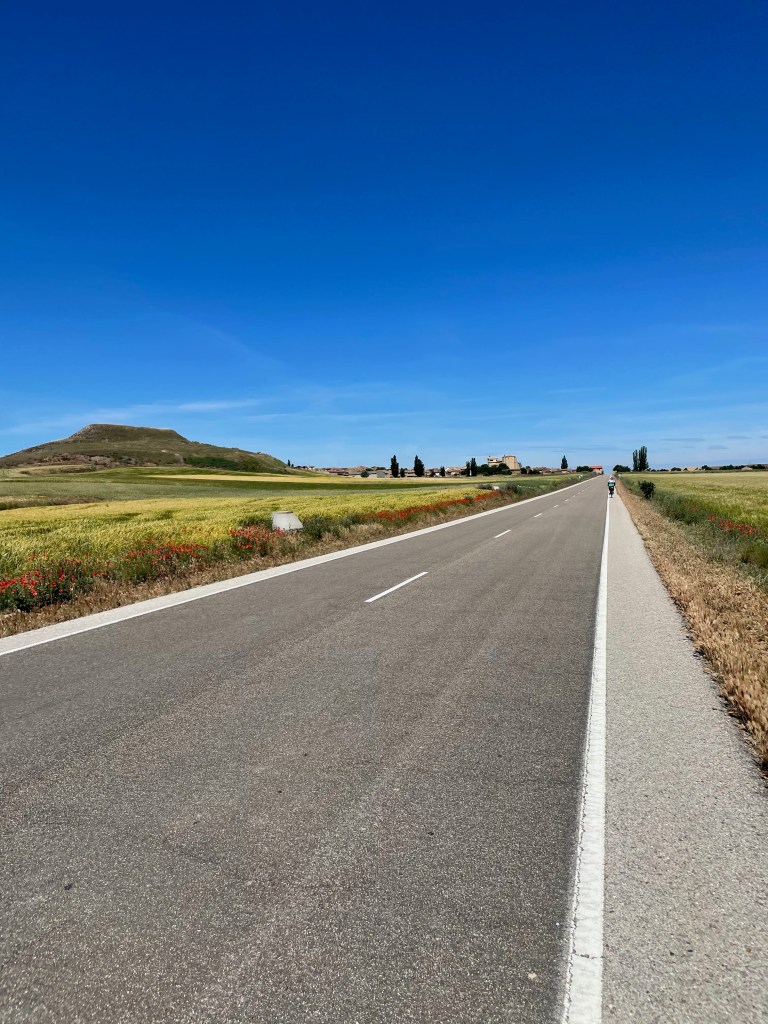
The second half is one of the toughest stretches I’ve faced on the entire Camino. Although we’re on asphalt, the road feels endless, and I hadn’t ridden a bike all year before this trip, so my physical condition isn’t exactly top-notch. The sun is blazing, and there isn’t a single tree in sight. I wear my hat to avoid sunburn, but the wind keeps blowing it into my face, blocking my view. Not that it matters—I’m crawling along at 2 km/h. The incline is mild but never-ending. There’s no sign of any downhill. The landscape is dominated by wheat fields. Argos rides so far ahead that I lose sight of him.
Finally, after an exhausting ride, I arrive at Bocadillos del Camino, a small village where I find Argos waiting for me on a bench. We head to the plaza to take a break. I can barely move my legs when I get off the bike, but I’m glad to have made it. I know there’s still more to go to reach today’s final destination, but I needed that rest. I go into the bar to buy a couple of beers, and as I leave, I walk straight into the glass door. I spill some beer but hurry outside as if nothing happened.
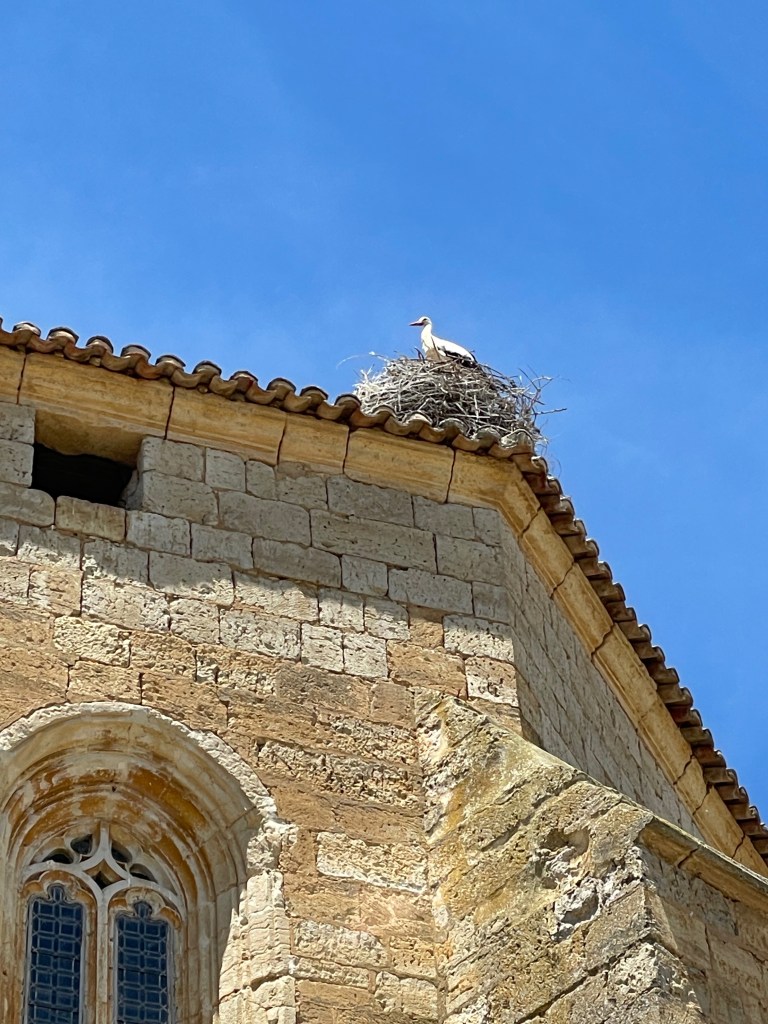
When I catch up with Argos in the plaza, I find him staring upward. He tells me to look. The sky is full of storks, and one is about to land in its nest. I’ve never seen a stork before. It’s an impressive bird, and its nest is no less remarkable—a massive structure perched on the cathedral roof.
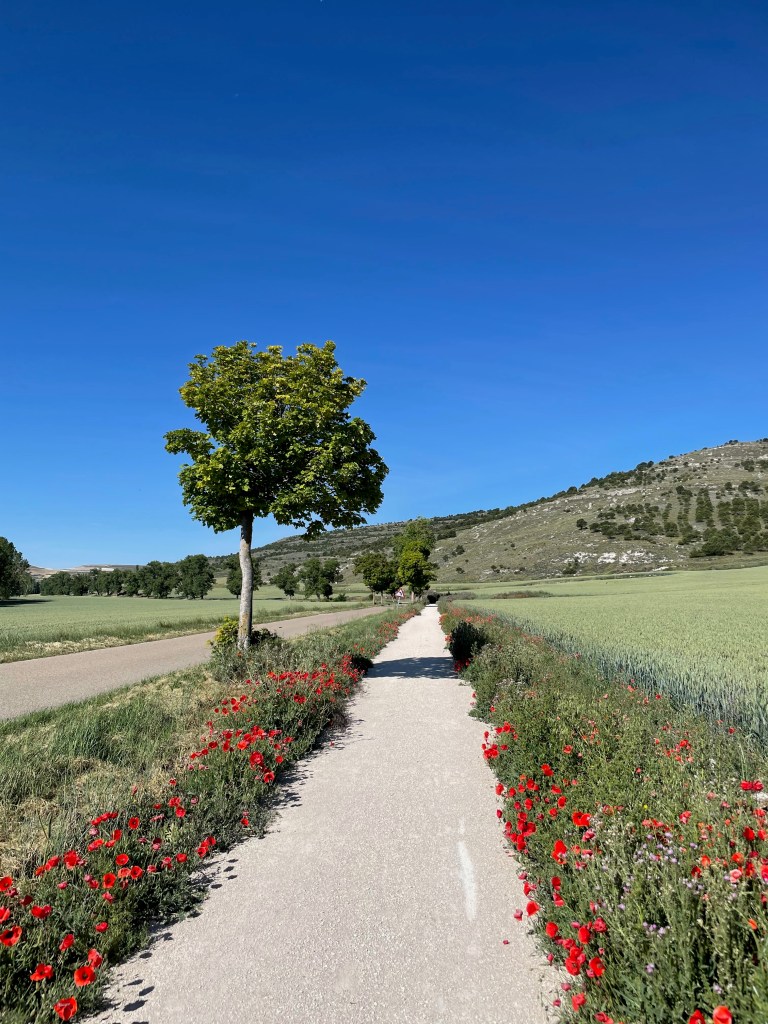
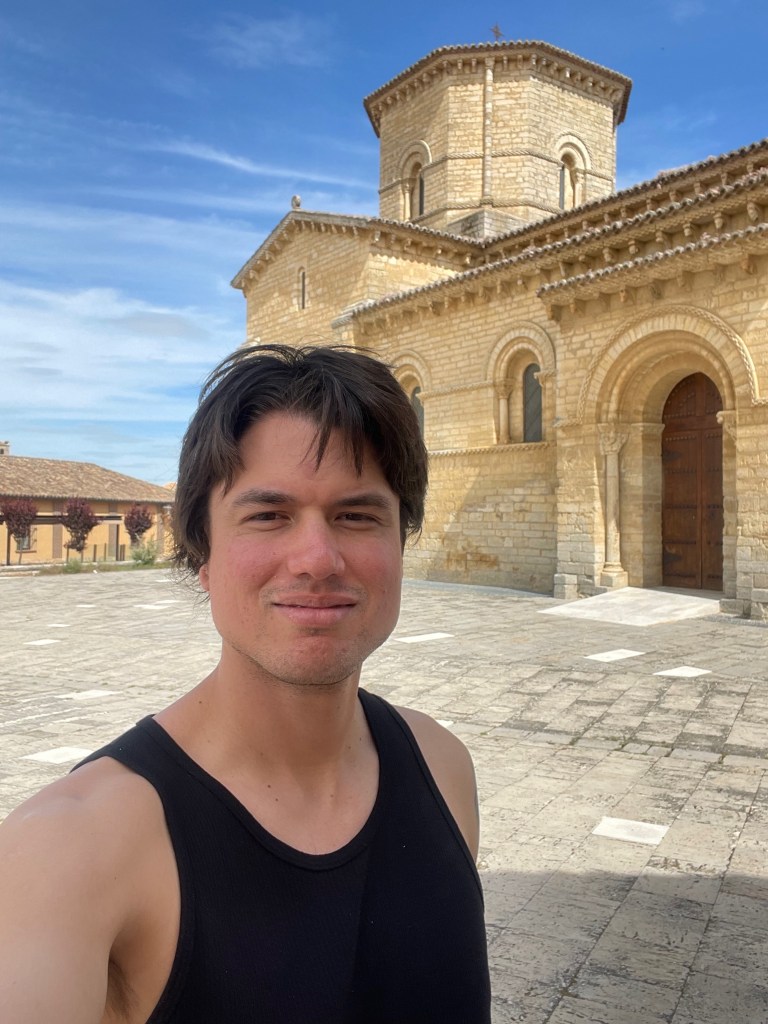
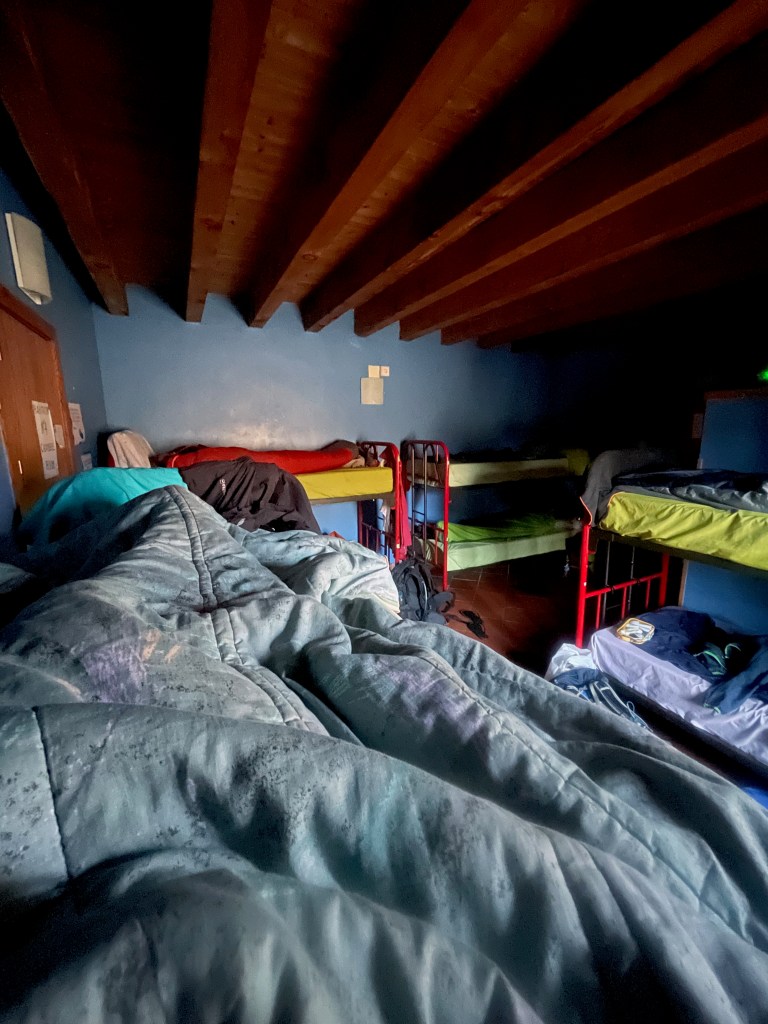
It’s time to continue. The last 5 kilometers to Frómista await. The final stretch is a tree-lined path. The shade makes the ride easier. At one point, we have to detour around some railway construction, but we finally arrive. We check into the municipal hostel, and I take a refreshing shower. I head to the laundry to wash my clothes, taking advantage of the strong sun. I chat with a pilgrim studying to become a priest and then collapse onto a sofa in the courtyard. I take a nap to recharge. I already feel better. It’s 4 p.m., but from the exhaustion I feel, it might as well be 11.
Later, Argos and I go out for dinner. When we return to the hostel, I mention that I didn’t see any sheets in our room. With a serious expression, Argos asks if I didn’t bring a sleeping bag, once again highlighting my lack of preparation for the Camino. I was already resigned to sleeping in my clothes, but I decide to ask Carmen, the hostel owner, if she rents sheets. When she sees I have nothing, she offers to lend me one of her blankets.
It’s 10 p.m., and everyone in the 12-bed room is already asleep. The sun is still shining brightly in the sky, and I realize it’s been days since I’ve seen the darkness of night.
 motionserg