
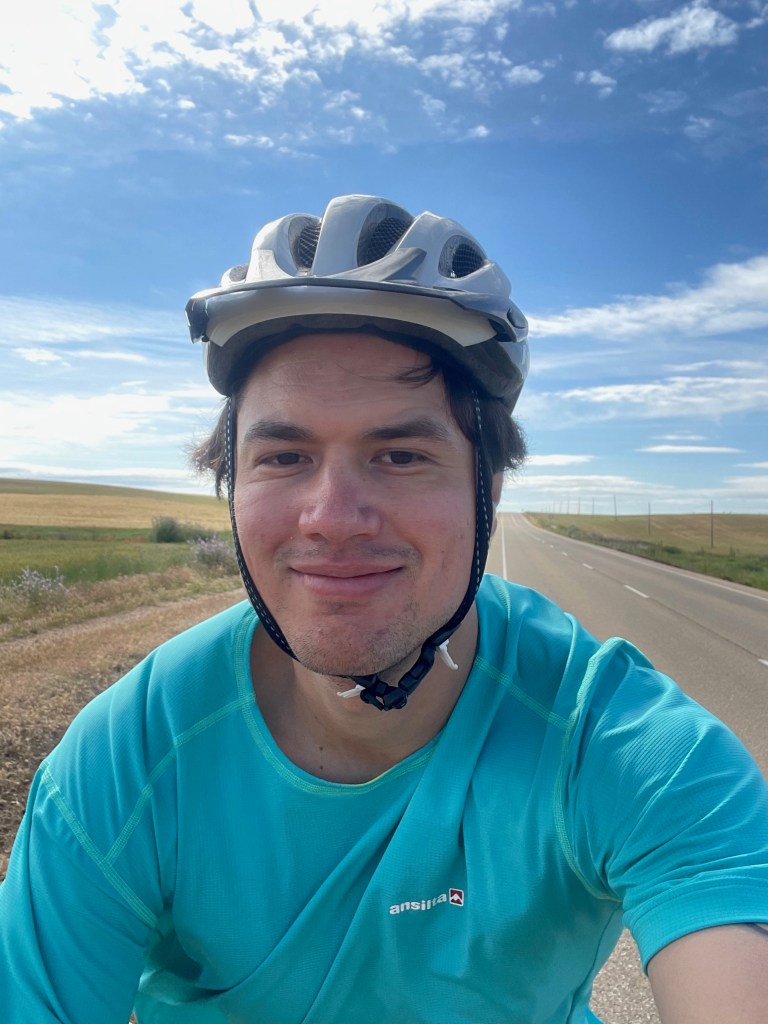
I wake up at 6:40 a.m., even before the alarm goes off. I feel refreshed. We get the bikes ready and set off. As we pedal out of town, Argos tells me he can’t believe I’m not wearing a helmet. I should mention I have one packed, but I’ve been wearing a hat to avoid getting sunburned. Argos warns me that I could get a €200 fine if the Guardia Civil sees me like this. I had no idea, so I don’t think twice—I pull the helmet out of my pannier and put it on.
We continue riding and, five minutes later, for the first time in the four days I’ve been on the Camino, a Guardia Civil vehicle appears. Half an hour later, another one passes by. Close call!
We ride 12 kilometers until we reach a small village, where we find a café and decide to stop for breakfast. The bike feels light, and I’m full of energy. When we hit the road again, my companion points out that my outfit isn’t exactly ideal for cycling. I respond with a smile, telling him I’m probably the least prepared person he’s ever met on the Camino. He laughs and agrees but adds that I have one thing going for me—I’m incredibly bold for diving in like this.
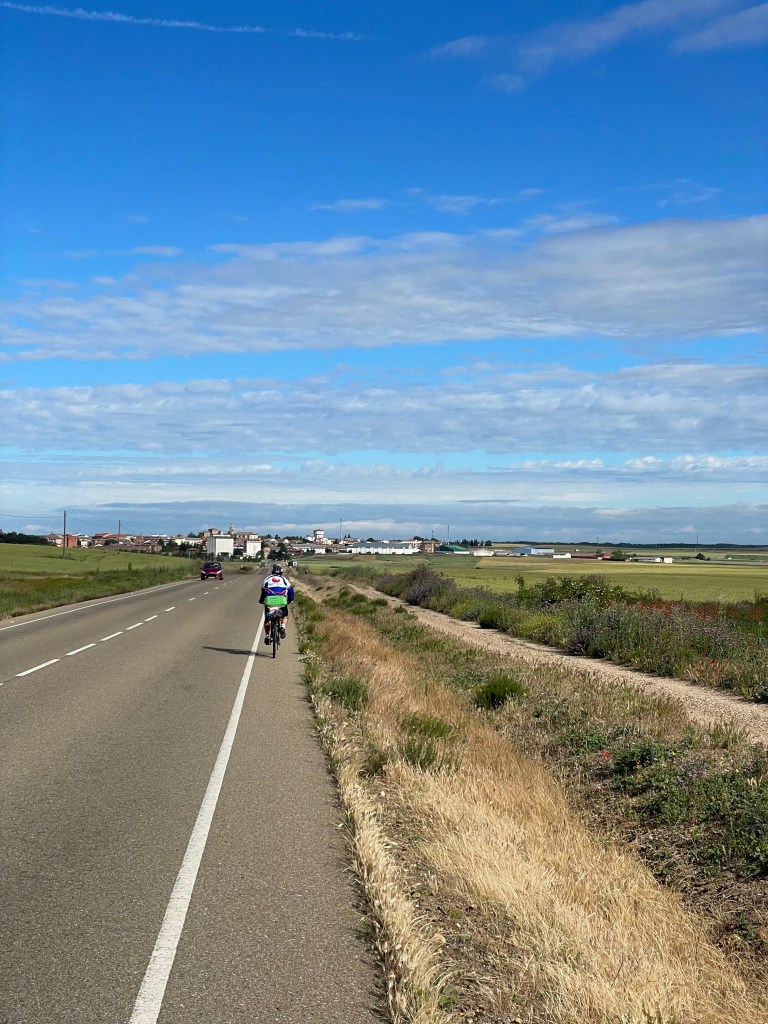
Today’s route is relatively flat but long. Most of the way runs alongside the road, and then we enter an ancient Roman path. It’s a dirt trail with trees lining only one side, offering partial shade that isn’t enough to shield us from the intense sun. At the end of the path, we find a tavern where we take a short break to enjoy the first beer of the day. Then we continue.
We pedal along a trail next to the road. At one point, I take out my phone to snap a photo, lose control, and end up falling into the ditch by the side of the road. I get up quickly, without much pain. I think I got lucky—I didn’t break anything. However, problems soon arise: my tire starts deflating, and I realize I don’t have a pump.
As I try to figure out the situation, I realize Argos has gotten so far ahead that I can’t see him. Luckily, I have his number saved and call him. He asks if I can make it to where he is, and after assessing the tire, I tell him I think I can. I pedal for about a kilometer to catch up with him. When I arrive, I find him on the phone. I park the bike, touch the tire, and without missing a beat, he says: “It’s flat.”
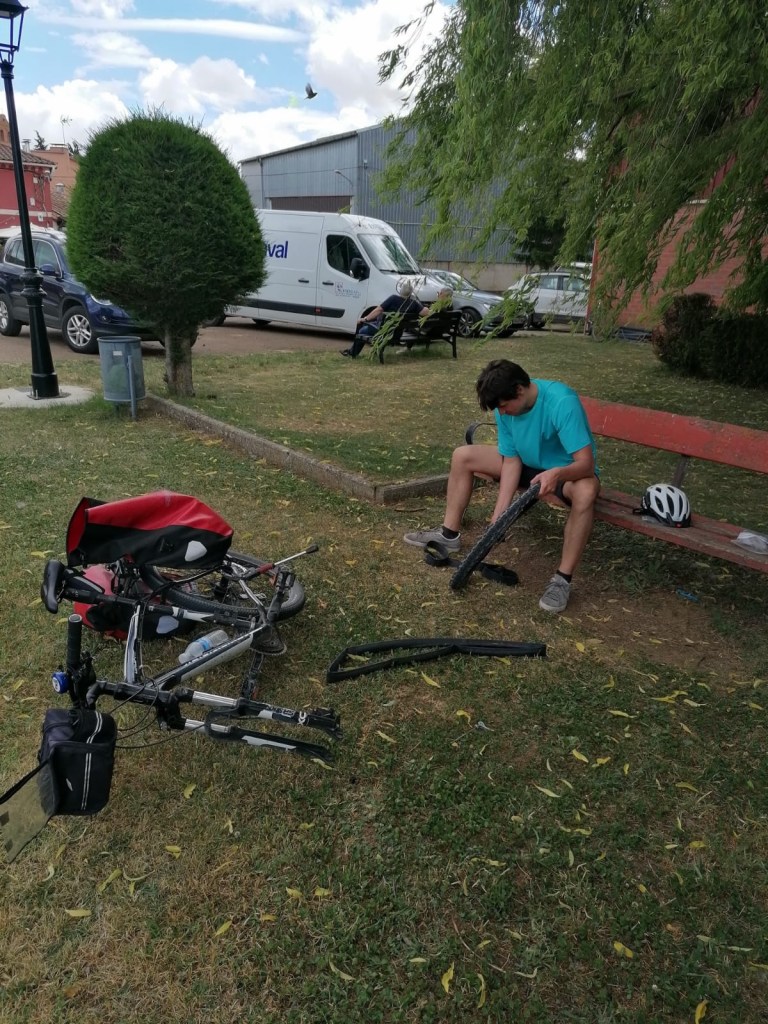
I curse for a while but remember that the people who rented me the bike gave me an aerosol that supposedly repairs minor damage. I use it and manage to inflate the tire a little so I can keep going. However, after a while, the tire deflates again. Fortunately, we’re passing through a village, so we stop at a small park.
Argos asks if I’ve ever fixed a flat tire. At that moment, a childhood memory hits me: a sunny afternoon in my backyard. My dogs were playing nearby, tea time was approaching, and my father was patiently teaching me how to fix a tire. Drawing on that memory, I confidently tell him I have.
I get to work, but I quickly realize that all I remember is the weather, the dogs playing, and tea time… not the actual process of fixing the tire. I have no idea where to start.
Following the scientific method, I try to remove the inner tube by hand—unsuccessfully. “You’ve never fixed a tire,”Argos says seriously. Finally, I set aside my pride and ask for his help. He does it quickly, and as I pack up the tools, he tells me he’ll continue ahead to avoid cooling down. As he rides off, I thank him. With a smile, he replies: “We’re companions, after all.”
I catch up with him later, and we keep going. There’s not much left, but the headwind picks up. I was sure the last 10 kilometers would be easy, but I was wrong. The wind and the incline make the final stretch feel endless.
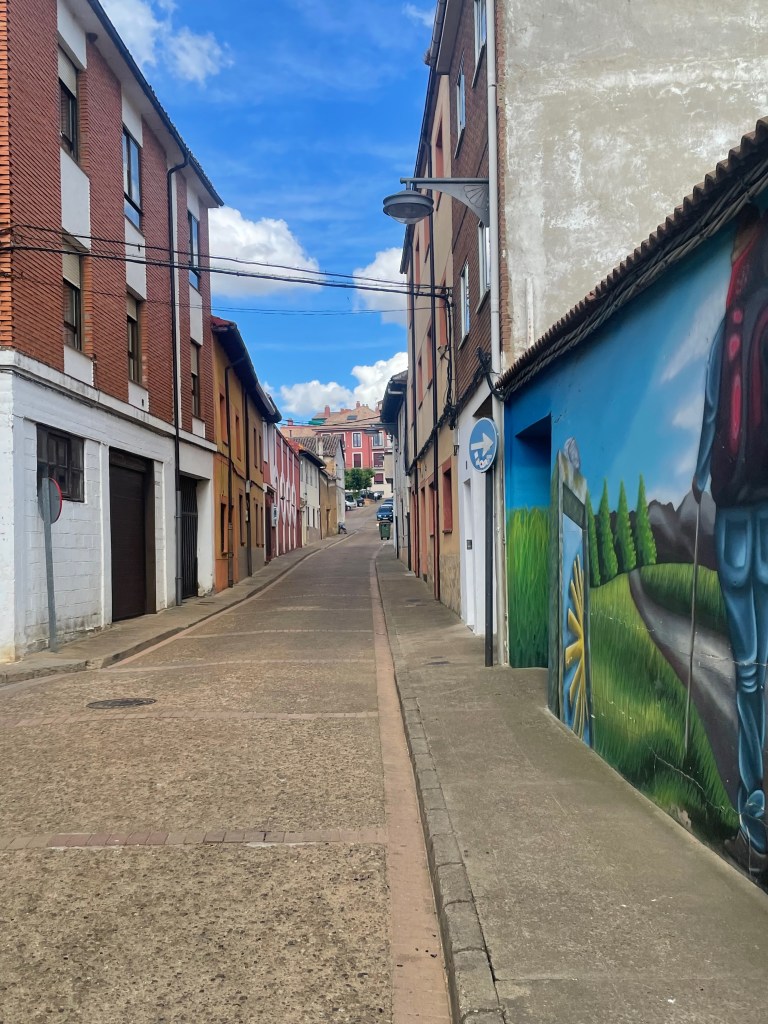
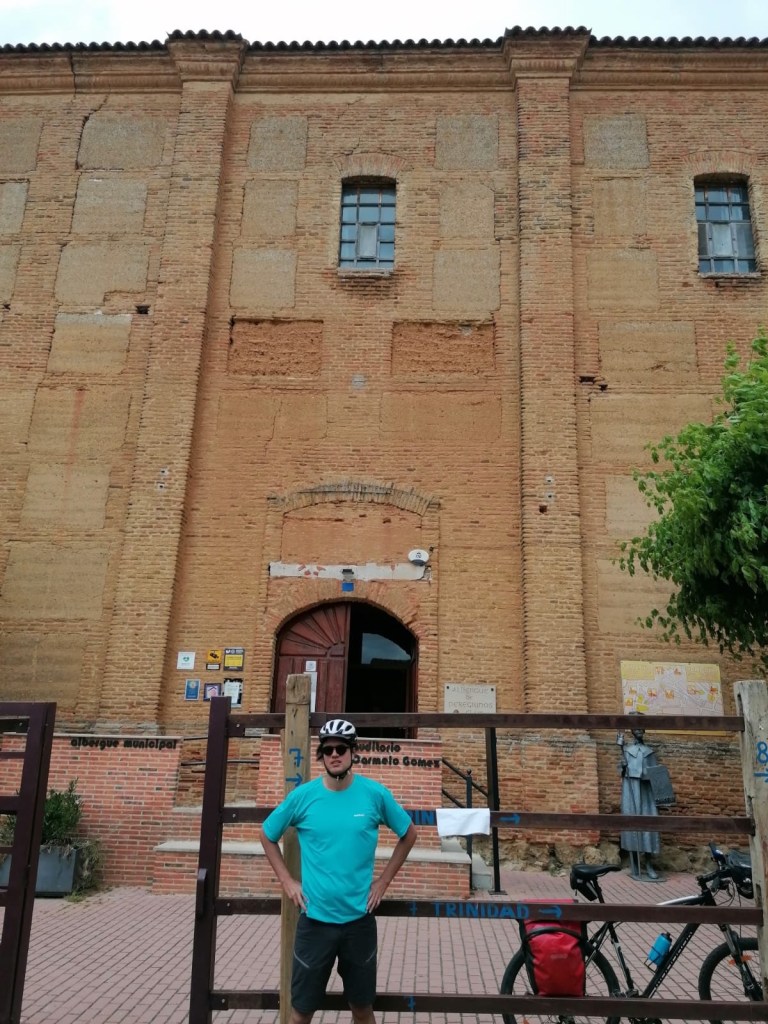
Finally, we reach Sahagún, our destination for the day, and look for a hostel to stay the night. When we arrive, I notice a sign indicating there’s no space and tell Argos we should look elsewhere. However, he decides to ask anyway. To my surprise, there are still two spots left in a three-bed room—a significant upgrade from the dorms with at least ten people.
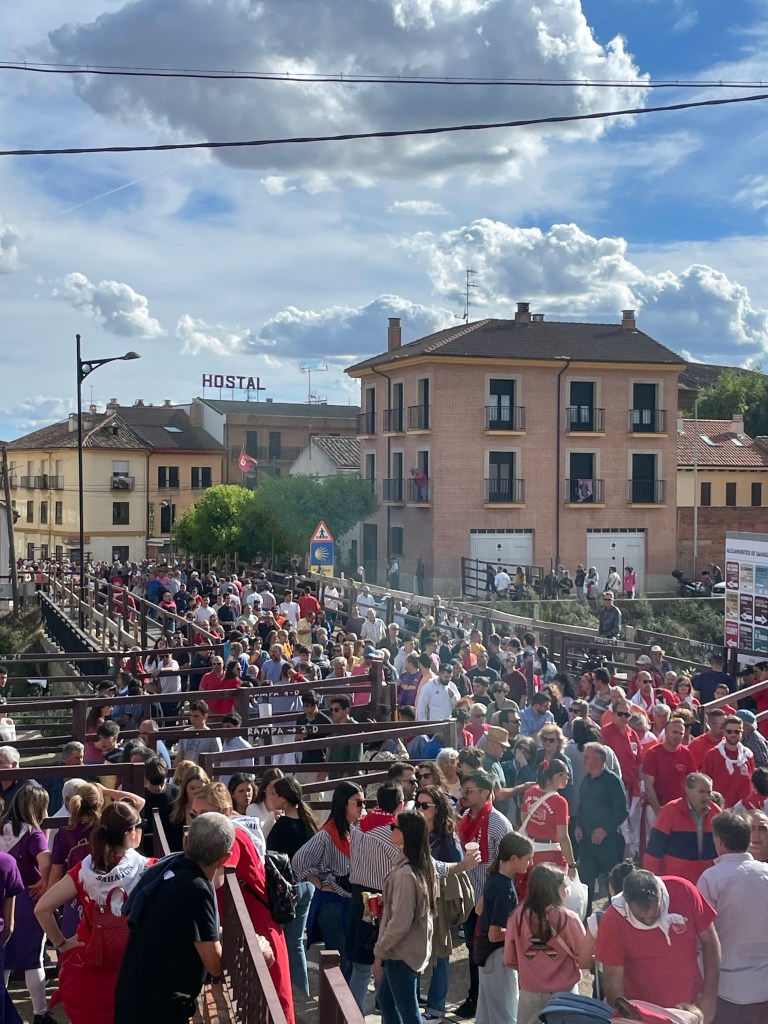
I shower and head to the kitchen for a snack. There, I chat with a woman from New York. Later, Argos tells me we need to hurry to catch the running of the bulls happening in a few minutes. We head to a hill overlooking the event. The streets are fenced off, marking the route. A few minutes later, a shot rings out, signaling the start. The crowd runs, followed by the bulls.
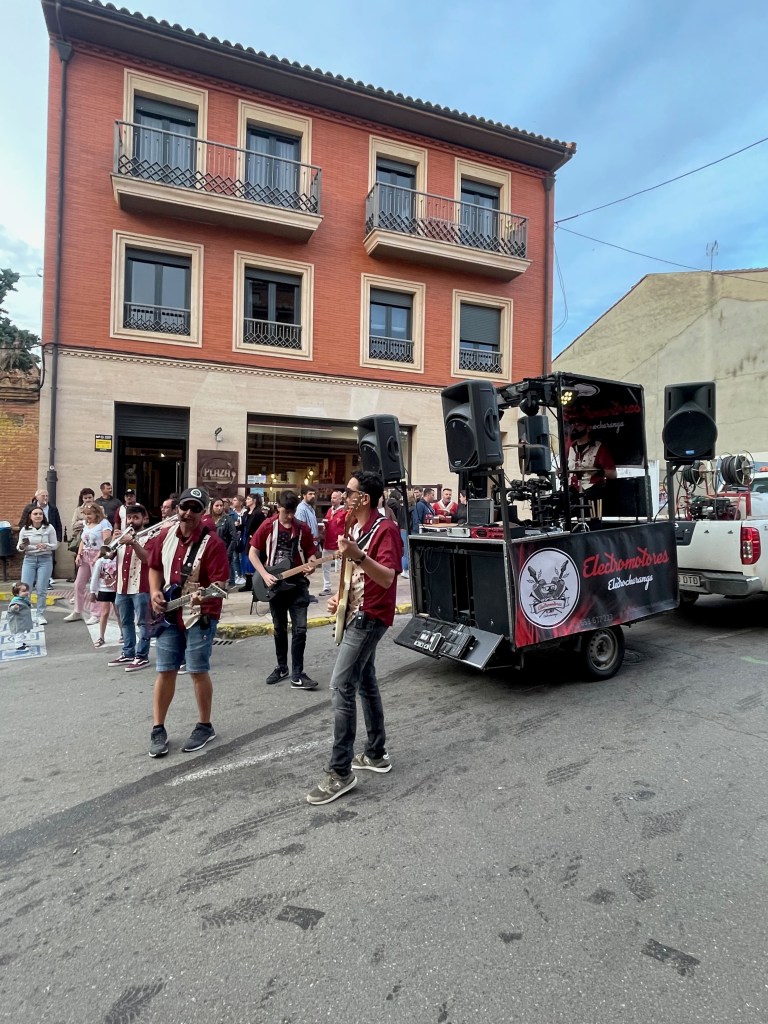
Afterward, we go to a terrace for beers. The atmosphere is festive—musicians and bands are everywhere. Later, we search for dinner. Argos turns in early, but I feel tempted by the ongoing celebration.
In the crowd, I spot a familiar figure: a tall, slim guy with long hair, someone I had already seen at the last two albergues and even exchanged a few words with this morning while strapping the panniers and luggage to my bike before setting off. I walk over to greet him, and we strike up a conversation. Jon Ander tells me, as we walk through the festival, that he’s 40 years old and from Bilbao. This isn’t his first time doing the Camino—he says it practically passes by his front door. This time, he took some time off work and decided to walk it again.
I tell him I’m thinking of not sleeping tonight, since my albergue closes at 10 p.m. and the party in this town is just getting started. He tags along as I check other albergues and hostels, but due to the holiday festivities, everything is fully booked.
Eventually, after some back and forth, I decide to head back. Once in my room, I lie down on the bed and watch the second half of the Euro Cup match. It ends with a historic result: Germany 5 – Scotland 1.

 motionserg