
Transitions are hard, but this one was particularly turbulent. Just a week before the big trip, the situation looked like this:
The apartment was fully furnished. I had planned to move things out gradually, with small daily trips, but my car was running on empty, and due to the fuel crisis, the lines at gas stations were getting longer by the day. On Monday, I passed by the station, and seeing that the line would take at least a couple of hours, I decided to come back the next day. Bad idea: later that day, the tanker drivers announced a strike starting the next morning. That only meant the lines would now be endless.
I was also organizing a farewell festival to play with my two bands before leaving. Considering I had never organized an event before, this was significant—not only did I have to rehearse, but also handle logistics.
In the middle of all that, the drummer of Verde Clorofila—my main band—decided to quit to play another event, leaving us hanging. We hadn’t rehearsed much, but had managed to piece together a few songs at a snail’s pace, since we hadn’t played them in a long time. This setback, however, took us right back to square one just days before the show.
With limited options and little time, we managed to secure a new drummer: Juan Pablo. Only 19 years old, he was spending his last few weeks in Bolivia before heading off on a scholarship to Berklee, one of the most prestigious music schools in the world. The guy was undeniably a beast—but could we pull off the full set in just two rehearsals?
On top of that, I had scheduled my book launch for Thursday. I hadn’t given it much thought, but it was also an event that required planning and logistics.
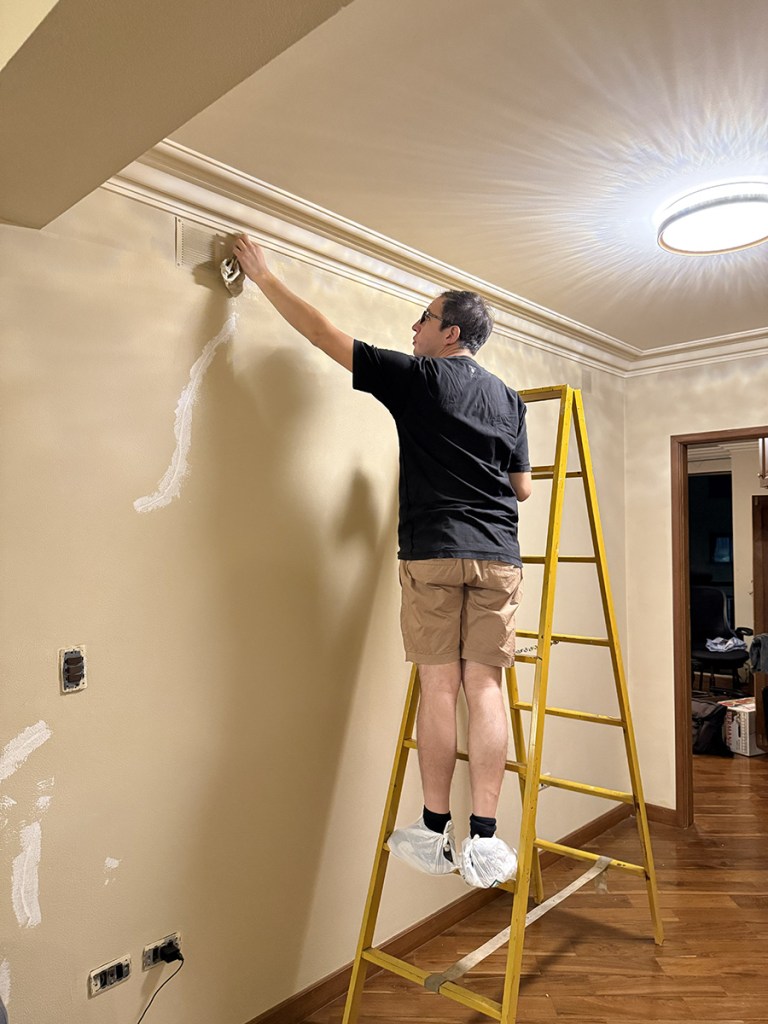
Aside from the move, I had to return the apartment painted and in perfect condition. Normally I would’ve done it myself, but I was short on time, so I asked my friend Juan if he knew a painter. He said he could do it with Andrés. Perfect—one less problem.
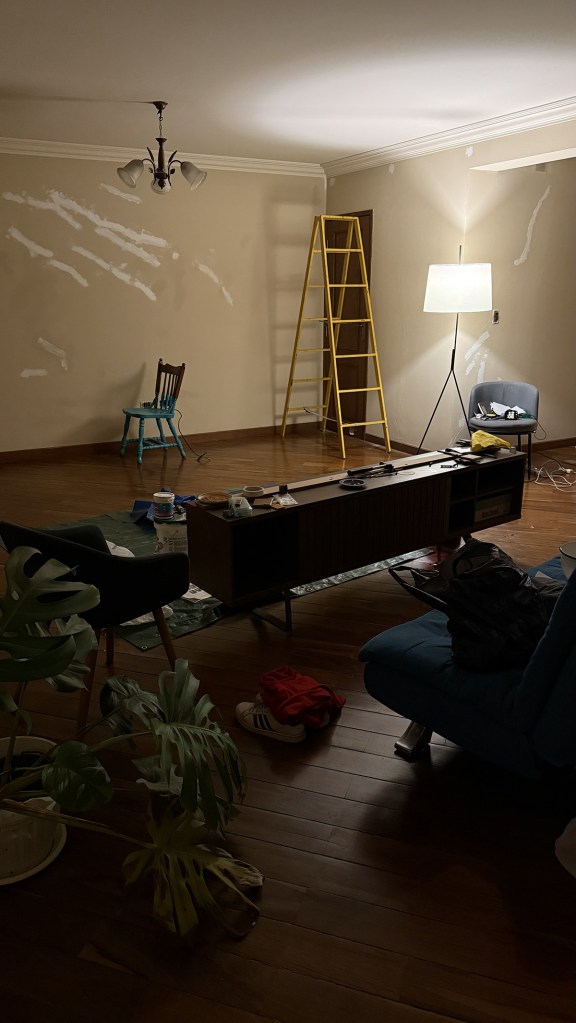
They went to the apartment over several days, painted it, and even helped me fix a few issues. It couldn’t have been a better solution: not only did they do a great job, I also got to spend time with my friends before the trip.
I had several pieces of furniture to sell, but also others that weren’t very marketable—like the custom-made ping pong table and Japanese sliding door. I thought of calling Cobi, the guy who built them, to ask if he might want to keep them or use them in a future project, since he works a lot in commercial and restaurant design.
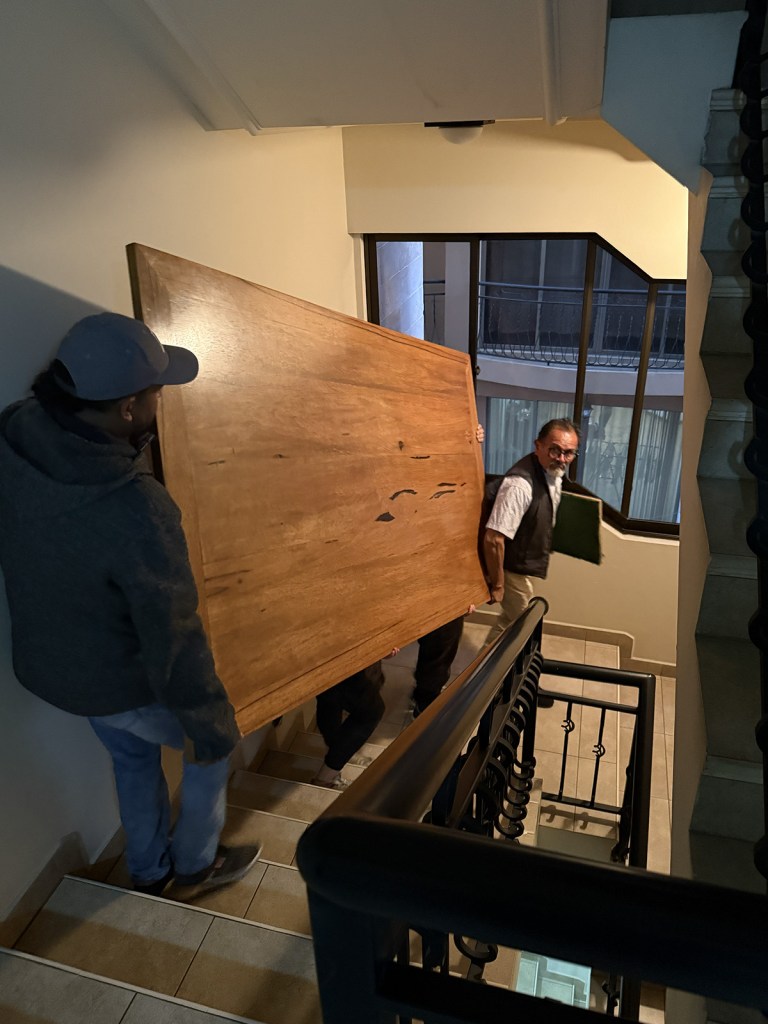
Cobi said he didn’t have any potential buyers but that he could store them himself, as he had space. I hadn’t considered that option, but it was perfect—especially since he had a pickup truck to move them.
Little by little, things were falling into place.
As the apartment emptied out, our sleeping arrangements became more and more improvised each night. It all started when the apartment owner decided to send the curtains to the laundromat, leaving the main bedroom completely exposed to the faintest ray of light. I can only sleep in total darkness, so that night, Valeria and I moved the mattress to the hallway floor—a space isolated from windows. We slept there for two nights, then the mattress and bed were taken to their new home.
The next night, we moved the sofa bed into the hallway, which had become our new bedroom. The day after, the sofa left too, along with almost all the other furniture. I hadn’t planned on sleeping at the apartment again, but just in case, I left behind a small foldable sponge “sofa” I had stored. To my surprise, that night we ended up sleeping there, and that little foam pad saved us.
Saturday—festival day and just two days before my trip—the apartment was still pretty full. Pedro, Cobi’s dad, had agreed to come by with his pickup at 9:00 to help me move the remaining furniture. It’s worth mentioning that I had only met him the day I moved into the apartment, three years earlier. We hadn’t been in contact since. I wasn’t a childhood friend of Cobi either—we didn’t see each other much. I mention this because Pedro offered to help me as if we’d known each other forever: with generosity and unmatched goodwill.
Moving everything took time. I think we finally finished around three in the afternoon, after grabbing a quick bite with Vale. Then we returned to the apartment, and she helped me pack the smaller things. That’s when Gladys arrived—a lady who had agreed to buy the last remaining pieces of furniture. By the time she left, it was almost time for soundcheck. I hadn’t been able to go over or rehearse any of the songs that still needed work.
When I got to soundcheck, everyone was already set up and ready to play. I got my gear up and running as fast as I could and played a couple of songs with Arturo’s band. By the time we finished, it was nearly 9 p.m. We didn’t get to soundcheck with Verde Clorofila, which had more technical needs. Marco was unsure about performing certain songs we hadn’t even rehearsed once, but I told him we had to be brave. The show would be a leap of faith.
Vale and I went back to the apartment for a quick shower and returned to the event. By the time we got there, the venue was already buzzing. I greeted the guys from Escalera de Papel—the first band—and told them it was time to start. The guests settled in at the tables, the band took the stage, and the event kicked off. That was the first moment I felt a bit of relief. Things were flowing: the place was full, the sound was spot on, and Escalera de Papel was killing it.
I approached Marco, who was watching the show with a sharp eye, and he suggested we change the schedule so The Meths would play next and Verde Clorofila would close the night. It sounded simple, but we’d had the lineup set for days. Without hesitation, I said let’s do it.
I went to break the news to Arturo, who was smoking a cigarette by the door. He didn’t take it well. We had a brief but tense exchange of words, and he walked back inside. I feared the worst—maybe he’d cancel the show and go home. There had already been tension between us that day, especially since he hadn’t helped at all with the event logistics amid all the moving chaos.
After a while, I went inside too. I found Arturo behind the bar and apologized for what I’d said. He apologized as well. We hugged and hit the stage. We killed it.
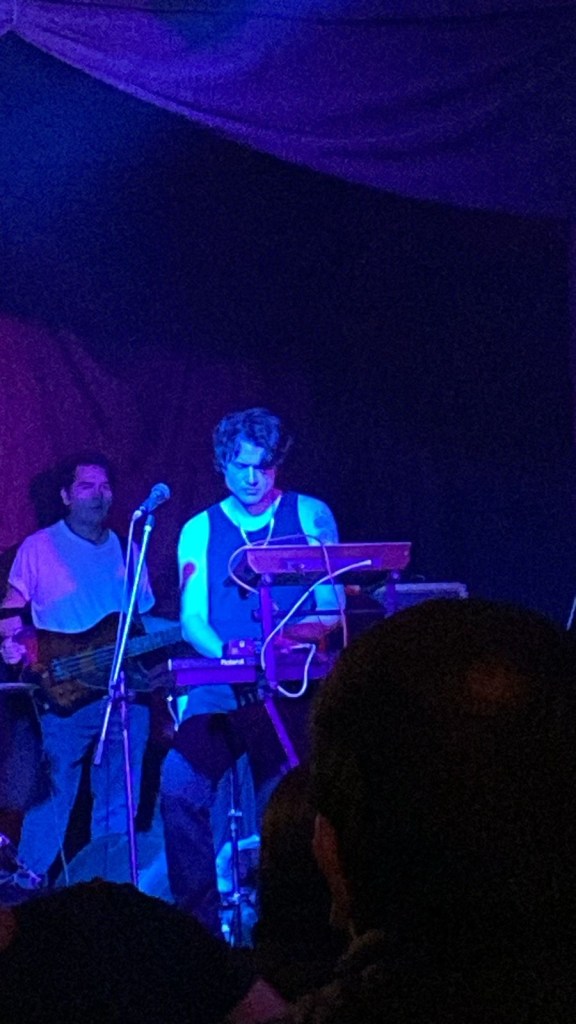
Then we played with Verde Clorofila. Marco and I didn’t leave the stage. We set up our gear and hoped for the best as the curtain opened. We hadn’t done a soundcheck. We had two songs we had never rehearsed, and a couple more we’d barely run through. We started off a bit cold, but quickly found the zone.
The high point of the set was when we played Rattlemantis—the first song we ever wrote and one we’d never managed to assemble for a live show due to its complexity. It was our favorite. It was the crowd’s favorite. It was epic.
The show ended and the night wrapped up with Wong Kar Waway’s DJ set. We danced and celebrated until three in the morning. Vale and I went back to the apartment to sleep on the aforementioned foam pad.
The next day we slept in. In the afternoon, we started packing. Vale boxed up everything in the kitchen while I went through the wardrobe in my room. Later, Marco came by and helped us take the last of it to my parents’ house. We finished around 3 a.m.
Monday was a strange day. It was both the day I had to hand over the apartment and the day of my trip. We got up around 8:30. We went to Cowork for breakfast and then stopped by a couple of notary offices downtown to sign some powers of attorney. We got back around noon, and there were still things left to move. It was nearing 1 p.m., and the apartment wasn’t fully cleared out.
Vale also had to vacate her apartment, but she hadn’t done anything because she’d spent all her time helping me. I wanted to help her too, but I also wanted to have lunch with my grandma to say goodbye. I started feeling stressed. I dropped her off at her building and told her I’d come back to help after handing over the apartment.
Lunch was brief, and then I headed back to do the handover. My dad wanted to come with me, so we went together. The inspection wasn’t very thorough, but there was a discussion about a wall damaged by humidity, and a toilet seat that had worn out over time. I argued that both issues were natural wear and tear and not my responsibility. The owner, on the other hand, said I should have notified her earlier.
We talked for a while until she eventually got emotional and told me I had always been a good tenant. She returned my deposit, and I gave her the keys.
After that, I went back to my parents’ house to shower and finish packing my suitcase. Around 3:30, I went to find Vale to help her, but she had already finished moving. Maybe I should have gone straight to the airport, but I wanted to see her and say a proper goodbye.
Since my flight had a domestic stopover, I thought I’d go through immigration in Santa Cruz and wouldn’t need to arrive too early. Big mistake. The flight was at 6:10 p.m., and I had planned to be at the airport by 5:00, which was already cutting it close. I ended up arriving at 5:40. The airport was packed. Obviously, they didn’t let me board. I missed the flight.
I thought rebooking wouldn’t be too hard, but due to nationwide blockades, I could barely find a seat on a flight for Thursday. And it was outrageously expensive. Not to mention I’d also miss my train connection from Madrid to Barcelona.
My dad left with my brother, mom, and grandma in the car. I went with Marco and Vale, who had also come to the airport to see me off. We went to Factory and ordered a few beers. I still couldn’t believe what had just happened. It felt like a rookie mistake, like I’d never flown in my life.
The week dragged on. I used the extra days to sort through the chaos I’d left behind at my parents’ house after the move. Everyone knew I was supposed to leave on Monday, so people I ran into on the street looked at me puzzled, asking what I was still doing in Cochabamba. I went to Cowork a couple more times to work in the afternoon, but now I had to drive there. It was no longer just a few steps from my apartment. That was no longer my neighborhood.
Thursday finally came. Travel day. Even though I had all the time in the world, I still didn’t manage to pack properly—but this time, I did make it to the airport early. Neither my mom, my grandma, nor Marco came this time. I was accompanied by my brother, my dad, and Vale. We arrived so early we had a couple of hours to chat. It was a pleasant wait. Eventually, I said goodbye and headed to board. Everything went smoothly. The flights from Cochabamba and Santa Cruz were on time.
I was counting on that, since I had booked a train from Madrid to Barcelona just two hours after my scheduled arrival. It was a gamble, but my only chance to make it to Barcelona on time. That day was the Primavera Sound festival, and Beach House—a band I had dreamed of seeing live for years—was playing that night.
The flight landed on time and I rushed off the plane. The train station was an hour away from the airport, and I needed to be on the platform at least 30 minutes early, so every second counted. After a massive corridor, endless escalators, an airport shuttle, and a quick immigration check, I reached the baggage claim. Things were looking good: if the suitcase came out quickly, I’d have enough time to get to the metro without stress.
The problem was the luggage wasn’t coming out. I waited fifteen minutes—nothing. Suddenly, the belt started moving. A few bags came out, then it stopped. Another five or ten minutes passed before it started again. A few more bags, then it stopped again. My chances of catching the train were dwindling. I started thinking of taking a taxi to the station, even if it cost me a fortune. Still, I wasn’t sure I’d make it on time.
Eventually, the belt moved again. This time it didn’t stop—but my suitcase was nowhere in sight. Finally, it appeared. I grabbed it and ran to the metro. Once inside, I couldn’t get my phone’s internet to work to check the route. I remembered I had to transfer at least once to reach the station, but I couldn’t afford to make a mistake. Madrid is huge, and one wrong turn could land me on the other side of the city.
After asking a couple of people, I found the right route and reached the station. To my surprise, I still had about twenty minutes before the train departed, so I took the chance to grab something to eat. I ordered a jamón ibérico sandwich and a coffee from the station shop, then boarded the train.
I had two and a half hours to get to Barcelona, which I used to work on a project I had to deliver that same day. I managed to finish it on time and then tried to rest a bit, but the trip was already nearing its end.
We arrived at Sants station in Barcelona, and the race started again. I grabbed my suitcase and rushed toward the metro station next door. The line to buy tickets was extremely long, so I changed plans and headed outside to find a taxi. But the taxi line was even longer, so I walked four blocks to a main avenue to try and hail one.
Once there, I managed to catch one almost immediately and headed to my friends’ apartment. They were already at the festival, but they had left the key under a gas cylinder next to the door. I just had to get someone to buzz me into the building. I rang all the buzzers until finally someone let me in.
The building had no elevator, so I carried all my luggage up four flights of stairs. I dropped everything in the apartment, drank a glass of water, and ran out to the metro to make it to the festival on time. I was doing okay, but Beach House was about to play, so I had to run. I walked about ten more blocks to the station, and then from the station to the festival.
I ran inside and headed straight for the first stage I saw. I hadn’t imagined the venue would be so massive, with considerable distances between stages. Luckily, I quickly found my friends, and we made our way to the main stage. We got there, found a good spot, Dani handed me a beer, Gian handed me some M, and the show began. Just in time, as if they’d been waiting for me. I’d made it.
The concert was incredible. It might sound like an exaggeration, but last year I wrote my goals on a piece of paper, and I only listed two: travel as a digital nomad and see Beach House live. That day, I felt I was fulfilling both.
We went to other shows afterward and eventually got something to eat. The party was in full swing, and we made it back around six in the morning.
On Saturday, my friends woke me up at four in the afternoon, rushing to get to the festival because an artist they liked was playing. Gian came into my room and handed me a magnesium pill and an omega-3. Besides being exhausted, I had a killer migraine. Still, I took a quick shower, and before I could finish buttoning my shirt, Gian and Dani were already heading out.
It was a hot day. We got to the stage, and the sun was shining directly on my face. I lasted a couple of songs before I had to step aside and lie down in a shady spot beside the stage. My friends were energized, but I could barely stay on my feet. Sometimes I tagged along to shows, other times I stepped away to rest or try to eat something. I felt more nauseous than hungry, but eventually managed to eat something that night and decided to head back around two in the morning.
Sunday morning, I woke up to a message from Tom, a client, asking if I was available for a last-minute project. Given my recent expenses, I accepted without hesitation. While my friends were still sleeping, I went to a café for breakfast and then came back to start working. I was still tired from the jet lag, so I took a quick nap and then worked into the evening. I finished the project, and we ordered some food.
Monday was a holiday in Barcelona, so it felt like a Sunday. We went out for breakfast, I worked a bit, and later we met up with Les at a bar near Poblenou. We sat drinking beers most of the day, then grabbed some tacos. Suddenly, it was 10 p.m., and I still had to work, pack, and rest—because the next day I was traveling to France.
Tuesday, I woke up at five in the morning after sleeping barely an hour, between jet lag and the stress of missing the bus. I washed my face, grabbed my things, and headed to the station. I had a long trip ahead: a bus, then a train, then another bus. And on top of that, I had three different projects due that day.
The first bus left Barcelona at 6:00 and arrived in Toulouse at 11:30. I tried to sleep to recharge but didn’t have much luck. Halfway through, we stopped at a supermarket, and I bought a sandwich for breakfast. Then we continued.
In Toulouse, I had about an hour to wait for the train, so I went to a nearby supermarket to grab some snacks and essentials. Once on the train, I started working. After a couple of hours, I arrived at Lannemezan station, where I had another two-hour wait for the next bus.
I walked about fifteen minutes to a bakery and ordered a plate of pasta and a croissant. I also took advantage of the time and space to get some work done. Then I went back to the station to wait for the bus. It finally arrived, and I boarded. That last leg took less than an hour, so I stayed alert to avoid missing my stop.
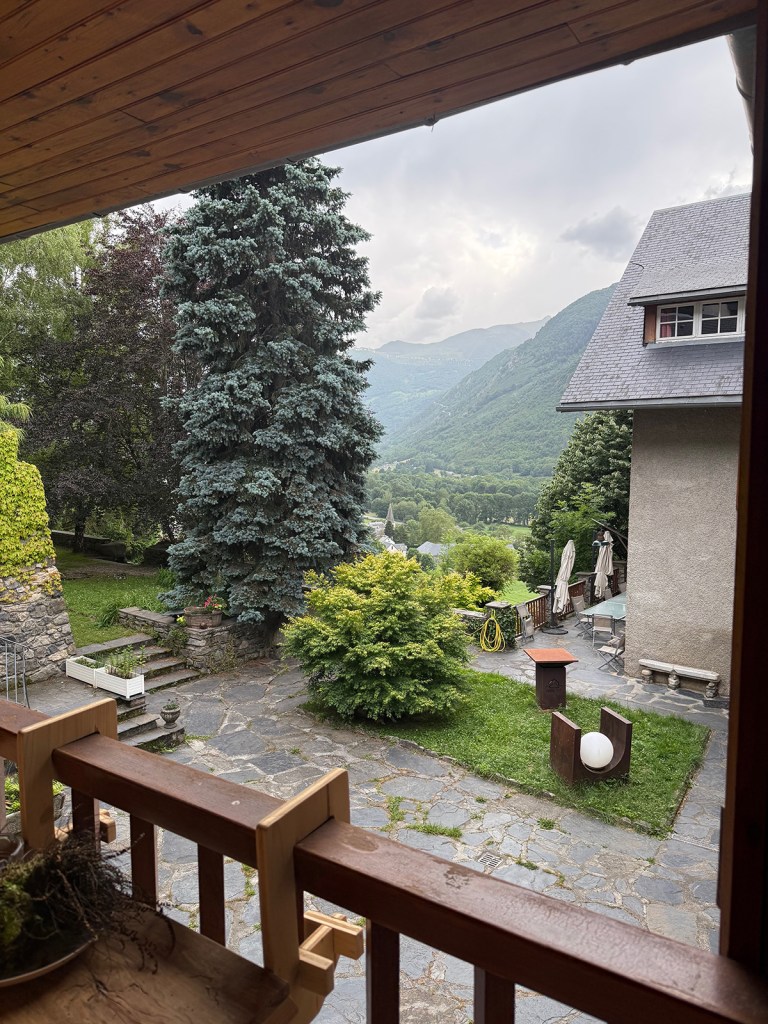
I arrived in Guchan, and Sergio, a volunteer from the house where I’d be staying, came to pick me up. Once there, I settled in and got back to work. I delivered the second-to-last project of the day and decided to eat something. I went down to the kitchen and found Ioanna, a Dutch woman, cooking. Seeing I had nothing to eat, she offered me a plate of pasta and a glass of wine. We chatted for a while, and then I went back to the workspace.
I worked a bit longer until around 11 p.m., when I felt I just couldn’t go on. I still had one more video to deliver before the end of the day, but considering my client was in California—a nine-hour time difference—I decided to go to bed and wake up early to finish the job. I shut down the computer and crawled into bed.
That night—after the move, the gas lines, the book launch, the festival, the trip, the other festival, and the second trip—I finally managed to rest.

 motionserg